
If there’s one thing worth adding to your morning routine that will pay off years from now, it’s sunscreen. But most people skip it — because it feels heavy, looks chalky, or just adds another step to a routine that already has too many. Tinted sunscreen fixes all of that.
It’s SPF and a light base in one step. It protects your skin from UV damage, evens out your complexion, and reduces visible redness — without adding bulk to your routine. Once you start, it’s hard to go back.
What Makes Tinted Sunscreen Different From Regular SPF
Regular sunscreen does one job: UV protection. Tinted sunscreen does that plus it adds a sheer layer of pigment that diffuses imperfections, minimizes redness, and gives skin a more even finish — without the weight of foundation.
The tint also helps with a problem most sunscreen reviews don’t talk about: the white cast. Standard mineral sunscreens often leave a grayish film, especially on deeper skin tones. The added tint absorbs that effect and makes the formula look natural on contact.
What to Look for in a Formula
Not all tinted SPFs are worth your time. Here’s what actually matters:
- Broad-spectrum SPF 30 or higher — SPF 30 blocks 97% of UVB rays; SPF 50 blocks 98%. The difference is small but adds up over years of daily exposure.
- Mineral vs. chemical — Mineral formulas (zinc oxide, titanium dioxide) sit on top of skin and physically deflect UV. They’re gentler on sensitive or acne-prone skin. Chemical formulas absorb more seamlessly on oily skin but can irritate reactive skin.
- Finish — Matte for oily skin, satin or natural for dry to normal. Avoid anything too dewy if you’re wearing it as a base.
- Shade — “Universal” tints vary wildly. Look for reviews from people with your actual skin tone before committing.
- Non-comedogenic — If you’re acne-prone, avoid formulas with coconut oil or heavy silicones. Zinc oxide-based SPFs are typically the safest bet.
The One That’s Worth It
EltaMD UV Clear Tinted is the formula dermatologists actually recommend — and it earns that consistently. It uses zinc oxide as the active ingredient, which makes it excellent for sensitive, acne-prone, and rosacea-prone skin. The texture is a lightweight gel-cream that disappears into skin without looking cakey or leaving residue.
The tint is subtle — it evens things out without adding noticeable color. It layers well under makeup, doesn’t pill over serum, and doesn’t leave the greasy finish that makes you want to skip sunscreen in the first place. If you’ve tried SPF before and given up, this is usually the formula that changes that.
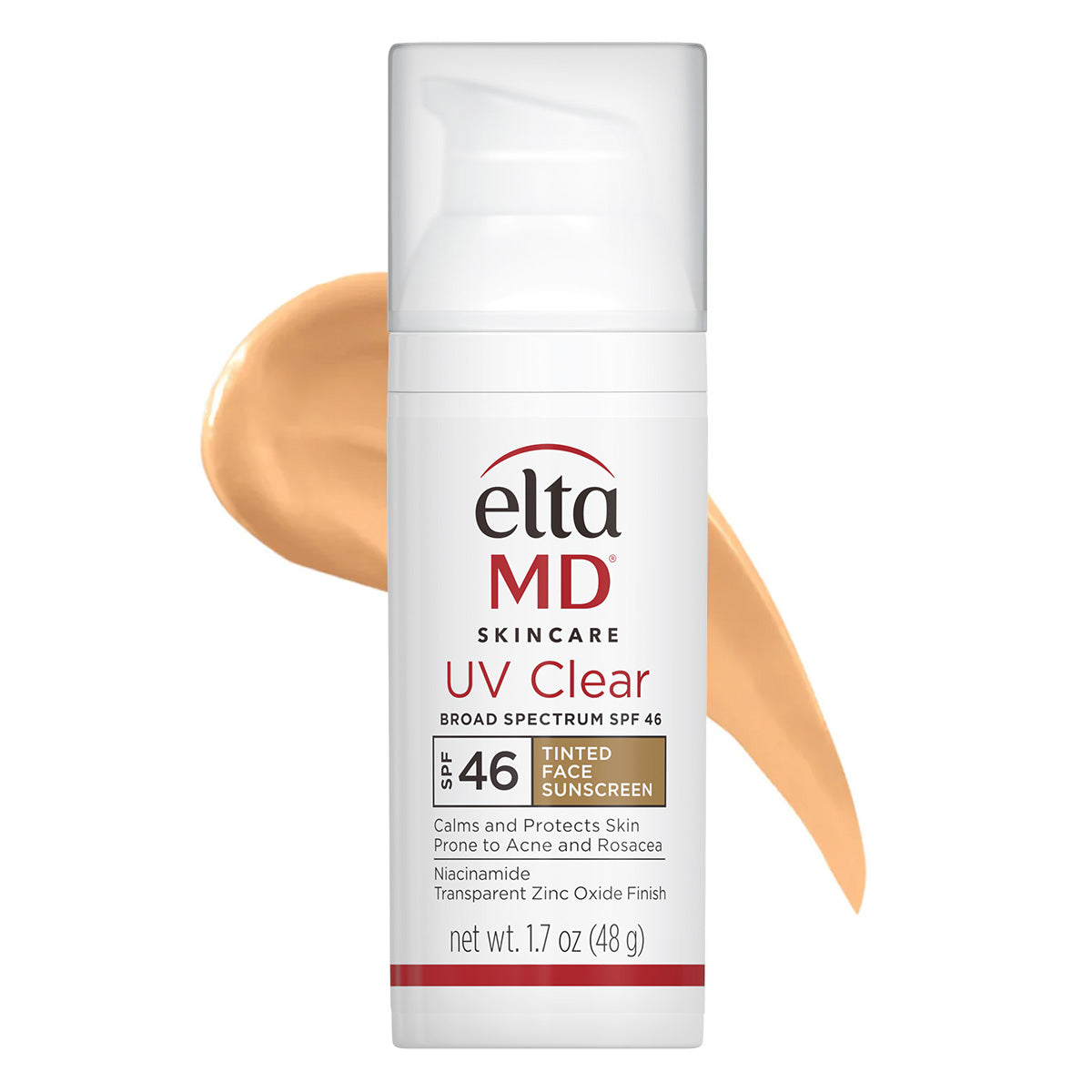
EltaMD UV Clear Tinted Broad-Spectrum SPF 46
Dermatologist-favorite zinc oxide formula with a sheer tint that works on most skin tones — calms redness and layers under makeup beautifully.
How to Layer It Into Your Routine
The order matters: sunscreen always goes on last, right before makeup. Here’s the full sequence:
- Cleanser
- Toner (if you use one)
- Serum — vitamin C in the morning pairs well and boosts SPF efficacy
- Moisturizer
- Tinted sunscreen — give it 60 seconds to set before anything goes on top
- Concealer or setting powder if needed — that’s it
Common Mistakes With Tinted SPF
Not using enough. SPF ratings are based on applying 2mg per cm² of skin — about a nickel-sized amount for your face. Most people use a fraction of that, so their actual protection is lower than the label implies. Be generous.
Skipping reapplication. SPF breaks down with UV exposure. If you’re near a window or outdoors for extended periods, reapply every two hours. A setting spray with SPF or SPF powder makes midday touch-ups painless.
Thinking cloudy days are safe. Up to 80% of UV rays penetrate cloud cover. Daily SPF is the habit that actually moves the needle on long-term skin health — sun or no sun.
Layering moisturizer on top of it. Sunscreen goes last. Putting anything over it dilutes the UV filter and reduces protection.

Frequently Asked Questions
Is tinted sunscreen enough coverage to replace foundation?
For most people on lighter coverage days, yes. It evens out the complexion, reduces visible redness, and gives a polished no-makeup look. If you prefer more coverage, layer a light concealer on top and skip foundation entirely.
Can you wear tinted sunscreen every day?
That’s the whole point. Daily SPF is one of the most proven things you can do for your skin long-term. Tinted sunscreen makes it easy to actually stick to the habit since it also doubles as a light base.
What’s the difference between mineral and chemical tinted sunscreen?
Mineral (zinc oxide, titanium dioxide) sits on skin and physically deflects UV rays — better for sensitive and acne-prone skin. Chemical formulas absorb into skin and convert UV to heat — they tend to be more seamless on oily skin but can irritate reactive complexions. EltaMD UV Clear uses zinc oxide for this reason.
Does tinted sunscreen work for darker skin tones?
It depends on the formula. Many tinted SPFs leave a white or gray cast on medium-to-deep complexions. EltaMD’s tint is subtle and works across a range of tones without looking ashy, but it’s always worth checking reviews from people who share your skin tone.
Can you apply tinted sunscreen over moisturizer?
Yes — and you should. Correct order: cleanser → serum → moisturizer → sunscreen. SPF goes on last, before any makeup. This keeps the UV filter intact and ensures full protection.