
If your morning routine has you layering SPF on top of moisturizer on top of a tinted moisturizer just to get out the door, tinted sunscreen might be the edit your routine has been waiting for. It does the work of your regular sunscreen and your light coverage all in one step — less to carry, less to layer, and honestly? Less to think about before 8am.
For anyone trying to streamline without sacrificing skin health, a good tinted SPF is one of those quietly life-changing finds. And once you find the right one, you’ll wonder how you managed without it.
What Makes Tinted Sunscreen Different From Regular SPF
Regular sunscreens — even great ones — can leave a white cast, a stark finish, or just sit on your skin looking like, well, sunscreen. Tinted sunscreens solve all of that by adding iron oxides and pigments to the formula. Those aren’t just for color — iron oxides actually provide added protection against visible light, which contributes to hyperpigmentation and uneven skin tone over time.
So tinted sunscreen isn’t just a cosmetic upgrade. It’s doing more protective work than your untinted SPF, while also giving your complexion a natural, even-looking base. Think of it less like “foundation lite” and more like your skin, but smoothed out.
The finish is typically sheer to light coverage — enough to calm redness, blur texture, and even out discoloration without requiring a brush or blending sponge. Most women find they can skip foundation entirely on their low-key days, or use far less on days they want more.
What to Look for in a Formula
Not all tinted sunscreens are created equally, and the differences matter more than you’d think.
Mineral vs. chemical filters: Mineral sunscreens use zinc oxide or titanium dioxide to physically block UV rays. They sit on top of the skin rather than absorbing into it, which makes them a better choice for sensitive, acne-prone, or reactive skin. Chemical sunscreens absorb UV and convert it to heat — they tend to be more cosmetically elegant but can trigger irritation for some. If you’ve ever had breakouts from SPF, switching to mineral is worth trying first.
Finish: Look for “satin,” “matte,” or “natural finish” if you’re oily or combo. “Dewy” or “luminous” formulas are beautiful if you lean dry. Avoid anything that claims to be “hydrating and brightening” if you’re prone to shine by noon.
Shade range: This has historically been where tinted sunscreens fall short. Many formulas were developed with lighter skin tones in mind, leaving medium and deeper skin tones with a gray or ashy cast. The best newer formulas use a universal tint — a sheer, slightly peachy-beige that blends across a wider range of skin tones without pulling cool or gray.
Skin-friendly actives: The best tinted SPFs double as actual skincare. Look for niacinamide (helps with redness and blemishes), hyaluronic acid (hydration), and antioxidants like vitamin C or E (free radical defense).
The One That’s Worth It
If there’s one tinted sunscreen that dermatologists, estheticians, and beauty editors consistently agree on, it’s this one. EltaMD UV Clear has been a cult product for years — the tinted version brings everything people love about the original formula and adds a sheer, skin-matching tint that genuinely looks like skin.
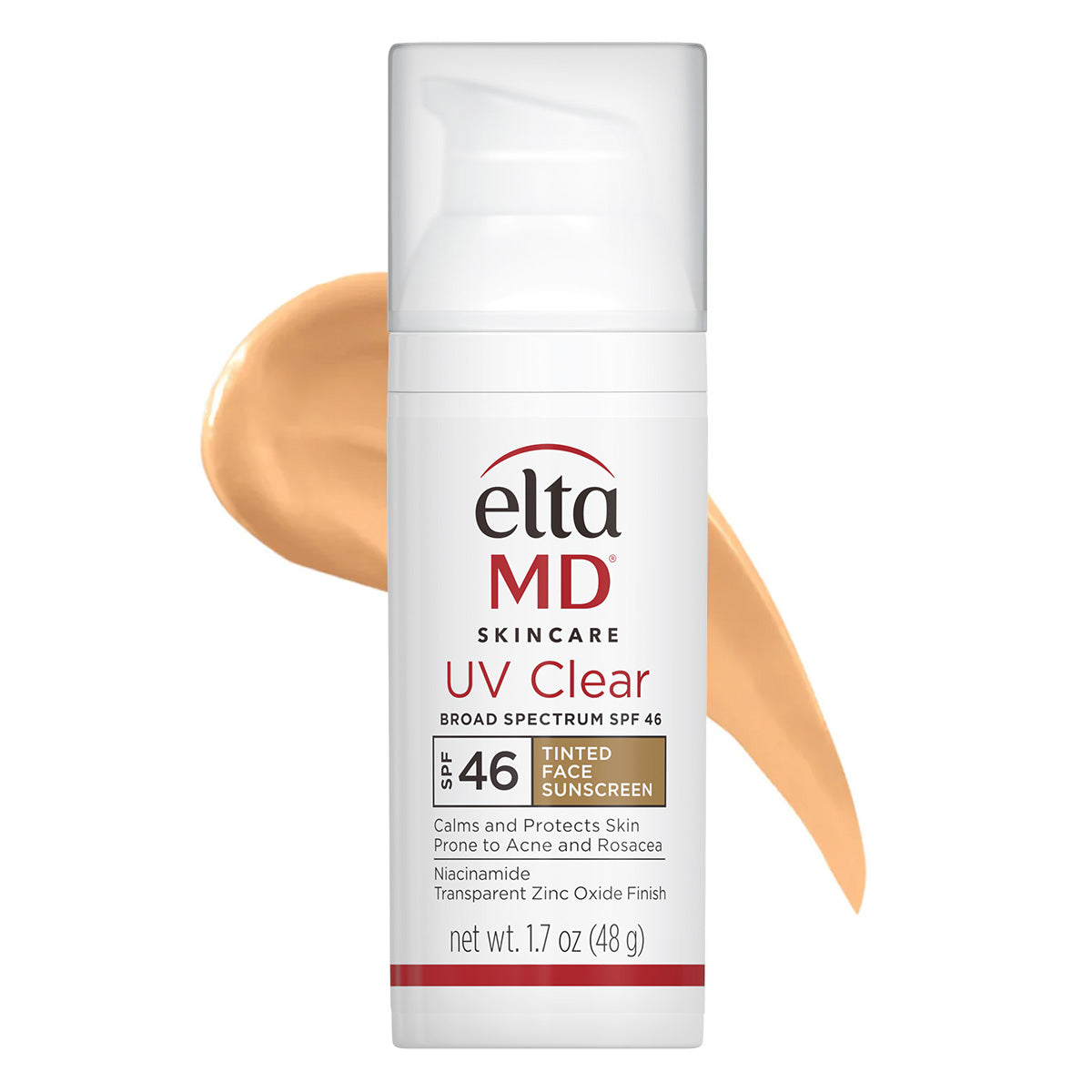
EltaMD UV Clear Tinted Broad-Spectrum SPF 46
Lightweight mineral SPF with 5% niacinamide and a sheer universal tint — fragrance-free, oil-free, and dermatologist-recommended for sensitive and acne-prone skin.
What makes it stand out: the formula is built around zinc oxide (9%), which gives you broad-spectrum mineral protection without the heaviness or white cast that used to make mineral SPF a dealbreaker. It’s fragrance-free, oil-free, and non-comedogenic — meaning it won’t clog pores or cause breakouts, even if your skin is on the reactive side.
The 5% niacinamide is a meaningful concentration — it’s enough to actually calm redness and fade post-breakout marks over time with daily use. The finish is satin, not matte, so it looks natural rather than flat. And the tint itself is a warm, sheer beige that works across a range of skin tones without going gray or orange.
For anyone dealing with redness, rosacea, or breakout marks, this is the rare SPF that addresses those concerns while protecting at the same time. It’s the kind of product that earns a permanent spot in your routine.
How to Layer It Into Your Routine
The good news: tinted sunscreen is one of the easiest products to incorporate because it goes on last, after everything else, and you’re done.
Here’s the order that works:
- Cleanser — start clean
- Toner or essence (if you use one) — while skin is still slightly damp
- Serum — actives like vitamin C or hyaluronic acid go here
- Moisturizer — give it 60 seconds to absorb
- Tinted SPF — last step, always last
Apply about a nickel-sized amount (more than you think) and pat or press it in rather than rubbing. This prevents pilling and gives you a more even finish. Let it set for a minute before you add any additional makeup — but honestly, many people find they don’t need it.
One thing to avoid: mixing your SPF into your moisturizer. It dilutes the formula and reduces the protection factor. Keep them separate, even if it adds 30 seconds to your routine.
Mistakes People Make With Tinted SPF
Even the best sunscreen doesn’t work if you’re using it wrong. A few common things that undercut your protection:
Not using enough. Most people apply about a quarter of the recommended amount. A thin swipe won’t give you SPF 46. Use a nickel-sized amount for your face, more if you’re covering your neck and chest.
Skipping reapplication. SPF breaks down with sun exposure. If you’re outdoors, reapply every two hours. For daily indoor-mostly routines, once in the morning is typically fine.
Applying it too early. Tinted sunscreen needs to be the very last step before you’re out the door. Applying it, then waiting 20 minutes to leave, then sweating at the gym isn’t the same as applying it right before you step outside into real UV exposure.
Expecting full coverage. Tinted SPF is a light, skin-evening coverage — not a foundation replacement for everyone. If you want more coverage, apply it as your base, let it set, then layer a concealer or light foundation on top as needed.
Storing it in a warm place. Heat degrades the active ingredients. Keep your SPF somewhere cool — not in a car, not on a sunny bathroom counter.

FAQ
Is tinted sunscreen enough to replace foundation?
For many people, yes — especially on low-key days. Tinted SPF gives you a natural, even base with sheer coverage that blurs texture and calms redness. It won’t give you the same coverage as a full-coverage foundation, but for a “your skin but better” look, it absolutely pulls its weight. Many women find they reach for foundation far less once they have a great tinted SPF in rotation.
Can you wear it every day?
Absolutely — that’s actually the point. Daily SPF use is one of the most evidence-backed things you can do for your skin’s long-term health. Because tinted sunscreen doubles as a light cosmetic, it’s much easier to wear consistently than a plain sunscreen. And consistency is everything when it comes to UV protection. The best sunscreen is the one you’ll actually use every day.
Mineral vs. chemical — which is better?
Both work. The difference comes down to your skin type and preferences. Mineral sunscreens (zinc oxide, titanium dioxide) sit on top of the skin and are less likely to cause irritation or breakouts — ideal for sensitive, acne-prone, or reactive skin. Chemical sunscreens absorb UV energy and convert it to heat — they tend to feel lighter and more invisible on skin, but can cause sensitivity for some people. For daily use on the face, mineral tends to be the more skin-friendly choice, which is why dermatologists recommend it for acne, rosacea, and sensitive skin.
Does it work for darker skin tones?
The best tinted sunscreens are formulated with sheer, universal tints that blend across a range of skin tones without leaving a gray or white cast. EltaMD UV Clear Tinted uses a formula that works well across light to medium skin tones, though those with deeper skin tones may want to test it first. More recently, many brands have expanded their tinted SPF ranges specifically to address the historic lack of inclusive shades. It’s worth testing a small amount on your jawline before committing to your full face.
Can you apply it over moisturizer?
Yes — and that’s exactly how you should apply it. Moisturizer goes on first, directly after your serums, and tinted SPF goes on last. Give your moisturizer about 60 seconds to absorb before layering your SPF on top. This way, both products perform the way they’re designed to without pilling or diluting each other. The one thing to avoid: mixing your SPF directly into your moisturizer or foundation, which can compromise the level of protection.