

If you say “beta-carotene” to most people, you’ll get a vague nod of recognition — something about carrots, something about eyesight, maybe vitamin A — and then the conversation will move on. It’s one of those supplement names that sounds like something that should already be in your multivitamin and doesn’t deserve its own dedicated post.
I thought the same thing, until I actually started looking at what beta-carotene does beyond its role as a vitamin A precursor. What I found surprised me. Beta-carotene is a potent, fat-soluble antioxidant with documented benefits for skin health, photoprotection, immune function, vision, and even mood — and most women who would benefit from it aren’t taking it specifically or in meaningful doses.
This is the complete, no-hype guide to beta-carotene: what it actually does, who should take it, what the research says, and what to watch out for. Let’s get into it.
What Is Beta-Carotene?
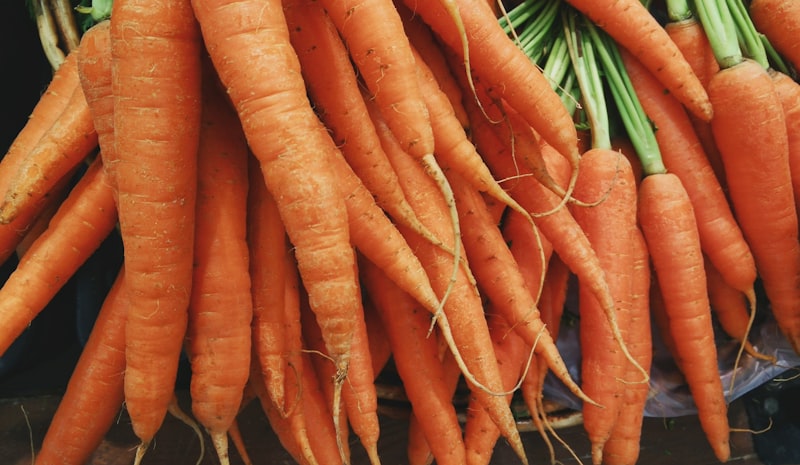
Beta-carotene is a carotenoid — one of over 600 naturally occurring pigments synthesized by plants, algae, and bacteria. It’s the compound responsible for the orange, yellow, and red colors in carrots, sweet potatoes, pumpkin, cantaloupe, mango, and apricots. It’s also abundant in dark leafy greens like kale and spinach, though the green chlorophyll masks the orange pigment.
Carotenoids are fat-soluble antioxidants that accumulate in cell membranes and fatty tissues throughout the body. Beta-carotene is the most extensively studied of all the carotenoids, and it’s biologically active in two distinct ways:
- As a provitamin A: Your body can cleave beta-carotene into two molecules of retinol (active vitamin A), making it a dietary source of this essential vitamin.
- As an independent antioxidant: Beta-carotene itself — before any conversion — scavenges free radicals and reduces oxidative stress throughout your body, particularly in fat-soluble environments like skin, cell membranes, and the lungs.
This dual function is what makes beta-carotene uniquely valuable and distinct from simply taking a vitamin A supplement.
How Your Body Converts Beta-Carotene to Vitamin A
This mechanism is central to understanding why beta-carotene supplements are meaningfully different from — and in many ways safer than — preformed vitamin A supplements.
When you consume beta-carotene (whether from food or supplements), your intestinal cells and liver use an enzyme called BCO1 (beta-carotene 15,15′-monooxygenase) to cleave the molecule and produce retinol. Crucially, this conversion is demand-regulated — your body converts more when it needs more vitamin A, and slows conversion when stores are adequate.
This regulatory mechanism is the key safety advantage of beta-carotene over preformed vitamin A. Preformed vitamin A (retinyl palmitate or retinyl acetate) bypasses this regulatory step and goes directly into your liver’s retinol stores. At high doses over time, it can accumulate to toxic levels — a condition called hypervitaminosis A — causing symptoms ranging from headaches and bone pain to liver damage and birth defects.
Beta-carotene essentially cannot cause vitamin A toxicity through this pathway. The only notable effect of excessive beta-carotene intake is carotenodermia — your skin takes on an orange-yellow tint as carotenoids accumulate in the skin and subcutaneous fat. This looks alarming but is completely harmless and fully reversible. Many people who eat large quantities of carrots or sweet potatoes experience mild carotenodermia without realizing it.
This safety profile makes beta-carotene the preferred way to ensure adequate vitamin A status, particularly for women of childbearing age where vitamin A teratogenicity (birth defect risk at high doses) is a concern.
The Benefits of Beta-Carotene
Skin Health: The Beauty Antioxidant
Beta-carotene is one of the most skin-relevant antioxidants in existence. After absorption, it selectively accumulates in the skin — particularly in the epidermis and subcutaneous fat — where it protects cell membranes from lipid peroxidation, neutralizes singlet oxygen (a particularly reactive free radical generated by UV exposure), and quenches photosensitizing reactions in skin cells.
This translates to real, measurable skin benefits. Research has shown that women with higher carotenoid levels in their skin have measurably better skin color, texture, and appearance as rated by objective observers. Interestingly, carotenoid-based skin color — the slight golden-warm tone you get from a carotenoid-rich diet — is actually rated as more attractive and health-indicating than a suntan. Your body’s natural carotenoid expression is a visible marker of internal health.
At the cellular level, beta-carotene supports keratinocyte differentiation (proper skin cell formation and maturation), works synergistically with vitamin E to protect fatty cell membranes from oxidative damage, and contributes to the maintenance of skin structural integrity. Long-term, consistent carotenoid adequacy is associated with slower skin aging and reduced UV-related photoaging.
Internal Sun Protection
This is one of beta-carotene’s most fascinating and underappreciated benefits. Regular supplementation with beta-carotene (15–25mg/day for 10–12 weeks) has been shown in clinical trials to provide measurable internal photoprotection — specifically, it raises the skin’s minimum erythema dose (MED), which is the amount of UV radiation required to cause a visible sunburn response.
A meta-analysis published in the Journal of Photochemistry and Photobiology pooled data from multiple trials and found a significant protective effect of oral beta-carotene supplementation against UV-induced skin damage. The effect size was modest compared to topical SPF, but it was real, consistent, and dose-dependent — the longer you supplemented and the higher the dose, the greater the protection.
Let me be absolutely clear: this does NOT mean beta-carotene replaces sunscreen. It doesn’t. Topical SPF protection is non-negotiable. But antioxidant-based internal photoprotection can meaningfully reduce the extent of UV damage that occurs despite topical protection — particularly important for those who spend significant time outdoors or are concerned about accelerated photoaging.
Vision Health: More Than Night Blindness
The carrot-eye connection is real, but it’s more nuanced than most people understand. Vitamin A is required for the synthesis of rhodopsin — the visual pigment in rod cells that enables vision in low-light conditions. Night blindness is classically the first clinical manifestation of vitamin A deficiency, and supplementation corrects it effectively.
But beta-carotene’s vision benefits extend beyond night vision and vitamin A status. As a carotenoid, beta-carotene is part of the broader family of macular carotenoids. While lutein and zeaxanthin are the primary carotenoids concentrated in the macula (the central area of the retina responsible for sharp vision), beta-carotene contributes to the overall oxidative protection of retinal tissue. Diets rich in mixed carotenoids — including beta-carotene — are consistently associated with lower risk of age-related macular degeneration and cataracts in epidemiological research.
Immune System Function
Vitamin A is fundamentally important for immune defense on multiple levels. It’s essential for maintaining the integrity of epithelial barriers — the mucosal linings of your respiratory tract, digestive system, and urinary tract that represent your first line of defense against pathogens. When these barriers are compromised (as they are in vitamin A deficiency), susceptibility to infection increases dramatically.
Vitamin A also plays a direct role in immune cell development and function. It influences the differentiation of T helper cells, enhances antibody production, and supports the activity of natural killer cells. Optimal vitamin A status is associated with more robust immune responses and better recovery from infection.
Beyond its role as vitamin A precursor, beta-carotene as an antioxidant reduces chronic oxidative stress, which is one of the primary drivers of immune dysfunction. A body under constant oxidative burden — from poor diet, chronic stress, pollution, or illness — is an immunologically compromised body. Beta-carotene helps address this at the cellular level.
Lung Health
Beta-carotene is highly concentrated in lung tissue, where it provides antioxidant protection against the constant barrage of inhaled oxidants, pollutants, and infectious agents. Epidemiological studies have consistently found associations between higher dietary carotenoid intake and better lung function and respiratory health outcomes in non-smokers.
Important Safety Note: Smokers and Beta-Carotene
This section is non-negotiable, and I’d be doing you a disservice if I glossed over it.
Two landmark clinical trials — CARET (Beta-Carotene and Retinol Efficacy Trial) and ATBC (Alpha-Tocopherol Beta-Carotene Cancer Prevention Study) — found that high-dose beta-carotene supplementation (20–30mg/day) was associated with increased lung cancer risk and lung cancer mortality in people who smoked heavily or had significant asbestos exposure.
The proposed mechanism: in the oxidative environment of smoke-damaged lung tissue, beta-carotene undergoes aberrant metabolism, potentially producing pro-oxidant breakdown products that promote carcinogenesis rather than preventing it. This risk appears specific to the combination of heavy smoking (or asbestos exposure) with high-dose supplemental beta-carotene.
If you currently smoke: do not take beta-carotene supplements. Get your carotenoids from food sources only. This isn’t hypothetical — it’s a well-replicated finding from two large, well-designed trials.
For non-smokers, beta-carotene supplementation at standard doses (up to 25mg/day) has an excellent safety record, with no evidence of increased cancer risk.
Food Sources of Beta-Carotene
Understanding food sources helps you contextualize how much supplementation makes sense:
- Sweet potato (1 medium, baked): ~14mg beta-carotene — more than adequate as a single food serving
- Carrots (1 cup raw): ~10mg beta-carotene
- Pumpkin (1 cup canned): ~17mg beta-carotene
- Kale (1 cup cooked): ~11mg beta-carotene
- Spinach (1 cup cooked): ~12mg beta-carotene
- Cantaloupe (1 cup): ~3mg beta-carotene
- Apricots (3 whole): ~2mg beta-carotene
Fat consumed with beta-carotene-rich foods significantly increases absorption — cook your carrots with olive oil, add avocado to your sweet potato, dress your kale salad with a fatty dressing. Raw vegetables have lower beta-carotene bioavailability than cooked ones for most foods.
Supplement Dosage Guide
For non-smokers, the commonly used supplemental range is 6–25mg per day. Supplement bottles typically express dose as IU of vitamin A activity: 6mg beta-carotene = approximately 10,000 IU. At this dose level, meeting vitamin A requirements is comfortable while also providing meaningful antioxidant and photoprotective effects.
Take beta-carotene with a meal containing fat — it’s fat-soluble and absorbs significantly better in the presence of dietary fat. A softgel with breakfast containing eggs, avocado, or a fat-containing smoothie is ideal.
My Top Beta-Carotene Picks
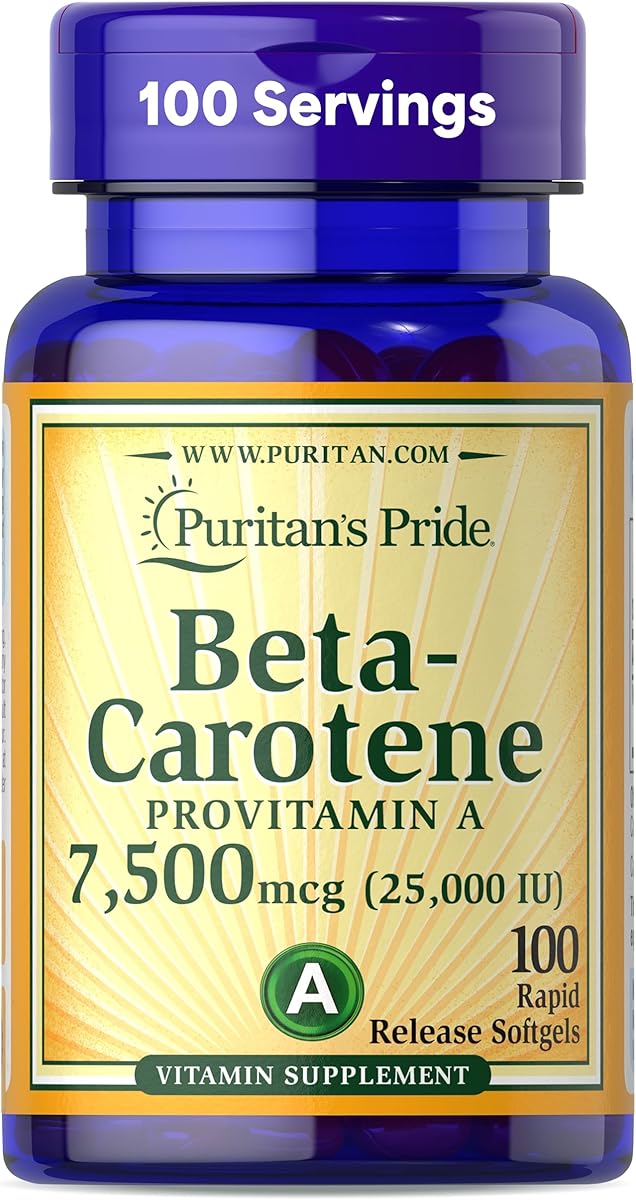
Puritan’s Pride Beta Carotene 25,000 IU
A well-formulated 25,000 IU (7,500mcg) beta-carotene softgel from one of the most established supplement brands in the US. Non-GMO, consistently well-reviewed for skin glow, vision support, and vitamin A adequacy. Excellent value for daily use.
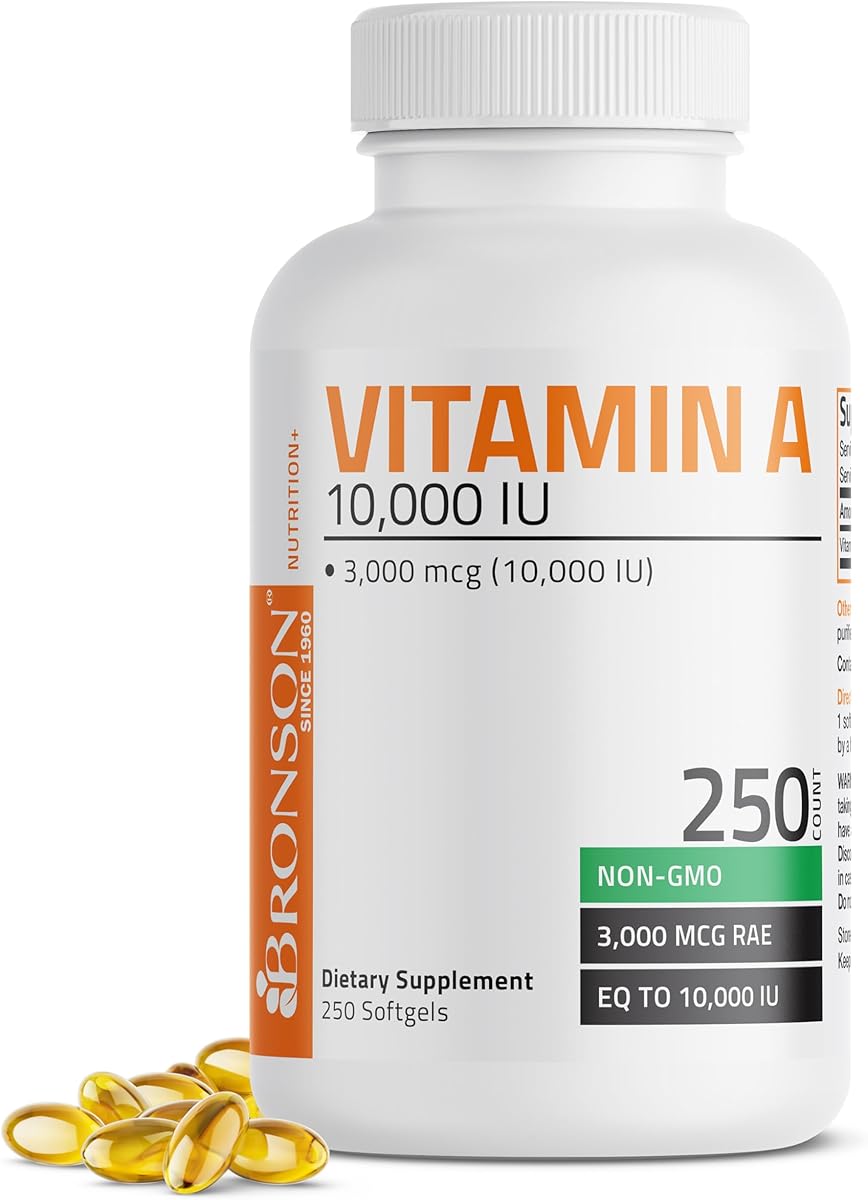
Bronson Vitamin A 10,000 IU Natural Beta-Carotene
Provides vitamin A activity from natural beta-carotene — the safer provitamin A form that your body self-regulates. Non-GMO verified, premium quality. A well-dosed, more moderate option at 10,000 IU per softgel, ideal for those who prefer a conservative starting dose.
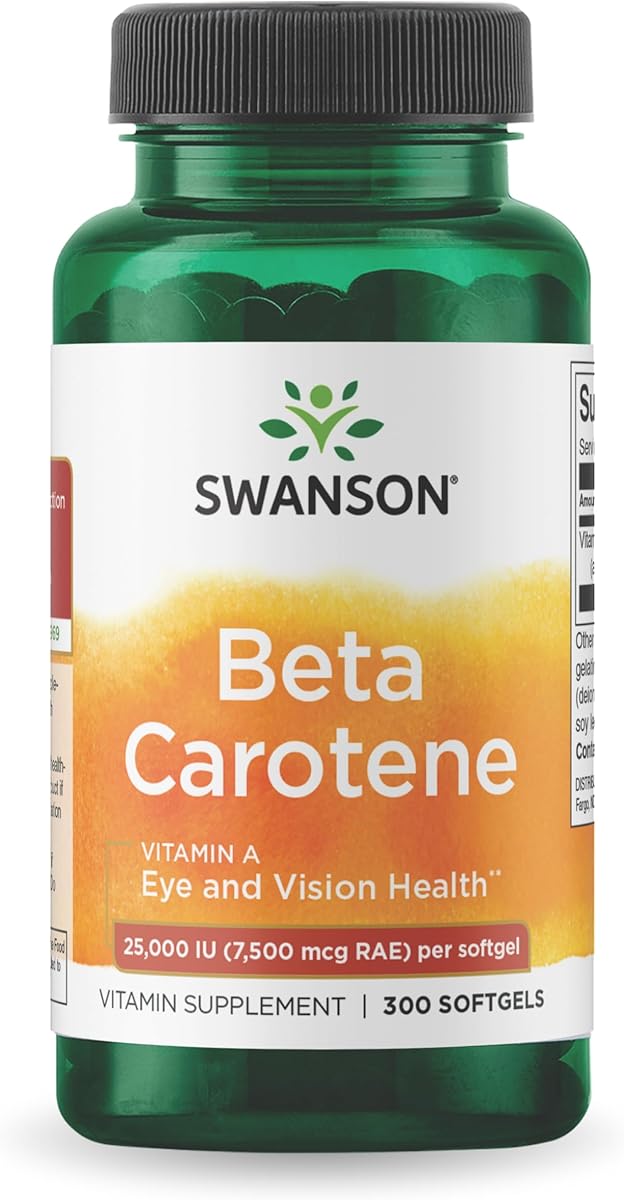
Swanson Beta-Carotene 25,000 IU Eye & Skin Health
From the trusted Swanson brand — clean, affordable, well-formulated beta-carotene for eye and skin health. 25,000 IU per softgel. Highly rated with thousands of verified reviews. A reliable option for those wanting the fuller antioxidant dose.
Frequently Asked Questions
Is beta-carotene the same as vitamin A?
No. Beta-carotene is a provitamin A that your body converts to retinol (vitamin A) on demand. Preformed vitamin A (retinyl palmitate) goes directly into storage. Beta-carotene is safer to supplement because your body regulates the conversion based on need.
Can beta-carotene give me a tan?
Sort of. High levels of dietary beta-carotene cause carotenodermia — an orange-yellow tint to the skin, especially on palms and soles. It’s harmless and reversible. It’s not a tan in the traditional sense, but it does contribute to a warm, golden skin tone that many find attractive.
Does beta-carotene protect against skin cancer?
Evidence is mixed. While beta-carotene reduces UV-induced oxidative damage and may reduce some forms of photodamage, it has not been consistently shown to reduce skin cancer risk in clinical trials. Use topical sunscreen as your primary protection strategy.
What time of day should I take beta-carotene?
With a meal containing fat — morning or evening, whichever you’ll remember consistently. The fat-solubility makes meal timing important, but the specific time of day doesn’t matter significantly.
Should I take beta-carotene as part of a mixed carotenoid supplement?
Many practitioners recommend mixed carotenoids (beta-carotene + lycopene + lutein + zeaxanthin) to mimic the variety found in a plant-rich diet. This can be a smart approach for broader antioxidant coverage, particularly if dietary variety is limited. Both standalone beta-carotene and mixed carotenoid formulas have merit.
Disclosure: This post contains affiliate links. As an Amazon Associate, I earn from qualifying purchases at no extra cost to you.
Free Download
Get My Daily Supplement Stack Guide
Everything I take, why I take it, and what I noticed — morning, midday, and evening. Free when you join the list.
No spam, ever. Unsubscribe anytime.