


I want to tell you about the most embarrassingly long time I spent being exhausted before someone figured out why. We’re talking the better part of two years. Two years of dragging myself out of bed feeling like I hadn’t slept. Two years of needing three cups of coffee just to feel functional until 11 AM. Two years of canceling evening plans because I was too depleted to show up, of staring at work I loved and feeling completely incapable of starting it, of looking in the mirror and wondering who this pale, dull-eyed person was.
I saw a therapist. I got my thyroid checked — normal. I tried eliminating gluten, then dairy. I downloaded sleep tracking apps and optimized my bedtime routine. I tried iron supplements after reading about anemia. Minor improvements here and there, but nothing that reached the root of the problem. I genuinely started wondering if this was just what being a woman in her thirties felt like.
Then a new doctor finally ordered a comprehensive nutrient panel — not just a standard CBC, but actual micronutrient levels. When the results came back, she called me herself: “Your B12 is critically low. This explains everything.”
It did. And the speed of recovery once I started supplementing was almost eerie. Within three weeks, I felt measurably more alert. Within six weeks, the brain fog had mostly lifted. Within three months, I felt like myself again — actually myself, not a tired approximation of myself. I couldn’t believe this simple deficiency had been stealing two years of my life.
If you’re tired, foggy, cold, or just persistently “off” — please read this post carefully. B12 deficiency is far more common in women than most people realize, it mimics depression and chronic fatigue, and it’s incredibly easy to fix once you know about it.
Why Women Are Especially at Risk for B12 Deficiency
Vitamin B12 is a water-soluble B vitamin that your body cannot produce on its own — you must get it entirely from diet or supplementation. It’s found almost exclusively in animal products: meat, poultry, fish, shellfish, eggs, and dairy. This creates the first major risk factor for women following modern dietary patterns.
But even women who eat animal products regularly can be deficient. Here’s why:
- Oral contraceptives: Multiple studies have found that hormonal birth control — including the pill, the patch, and the ring — depletes B12 levels, along with folate, B6, zinc, and magnesium. If you’ve been on hormonal contraception for several years, your levels may be gradually declining without your knowledge. This was my situation exactly.
- Metformin: One of the most commonly prescribed medications for type 2 diabetes and PCOS, metformin significantly impairs B12 absorption in the gut. Many doctors prescribe it without mentioning this risk or recommending supplementation.
- Proton pump inhibitors and H2 blockers: Acid-reducing medications for GERD, heartburn, or acid reflux impair the release of intrinsic factor — a protein produced by stomach cells that’s essential for B12 absorption. The irony: many women take these medications for years without knowing they’re quietly depleting a critical vitamin.
- Age: Stomach acid production declines naturally starting in your 40s, and B12 absorption from food depends on adequate stomach acid. By age 50, a significant proportion of adults have impaired B12 absorption regardless of dietary intake.
- Plant-based and vegan diets: B12 is essentially absent from plant foods (with the exception of certain algae and fermented foods in amounts too small to rely on). Even “mostly plant-based” eating over several years can slowly deplete B12 stores.
- Gut conditions: Crohn’s disease, celiac disease, IBS, and any condition affecting intestinal absorption can compromise B12 uptake even when dietary intake is adequate.

Symptoms of B12 Deficiency: The Complete Picture
This is the section I wish someone had shown me two years earlier. The symptoms of B12 deficiency are almost comically easy to attribute to other causes — stress, age, sleep deprivation, depression, anxiety, burnout. Please read this list carefully:
- Fatigue and weakness that doesn’t improve with adequate sleep — often the first and most prominent symptom
- Brain fog — difficulty thinking clearly, poor short-term memory, trouble concentrating
- Depression, anxiety, or mood instability that seems to come from nowhere
- Tingling, numbness, or “pins and needles” in hands, feet, or limbs — a sign of nerve involvement
- Feeling constantly cold, especially in hands and feet — due to poor red blood cell production
- Pale or slightly yellowish skin (from breakdown of abnormal red blood cells)
- Rapid or irregular heartbeat with minimal exertion
- Shortness of breath going up stairs or during mild exercise
- Sore, red, or swollen tongue (called glossitis)
- Mouth ulcers that recur frequently
- Balance problems or unsteadiness — a sign of neurological involvement
- Vision changes or blurring
If you have three or more of these symptoms and haven’t had your B12 checked recently, please request a test at your next doctor’s appointment. It’s a straightforward blood test that’s usually covered by insurance and takes no preparation on your part.
What Optimal B12 Does for Your Body
Mitochondrial Energy Production
B12 is a critical cofactor in the metabolic pathways that convert carbohydrates, fats, and proteins into ATP — the energy molecule that powers every cell in your body. Without adequate B12, your mitochondria cannot run these reactions efficiently, and energy production across every organ system is compromised. This is the direct mechanism behind B12 deficiency fatigue — it’s not psychological, it’s biochemical. Your cells are running on empty.
Neurological Function and Myelin Maintenance
B12 is essential for the synthesis of myelin — the protective fatty sheath around nerve fibers that allows electrical signals to transmit quickly and accurately throughout your nervous system. When B12 is deficient, myelin degrades in a process called subacute combined degeneration of the spinal cord. This produces the tingling, numbness, coordination issues, and cognitive problems seen in more advanced deficiency.
The critical point: neurological damage from B12 deficiency can become permanent if not caught and corrected. This is why it’s important to identify and address deficiency before it reaches the neurological stage, not after.
Mood and Mental Health
B12 is directly involved in the synthesis of serotonin, dopamine, and norepinephrine — the three neurotransmitters most intimately connected to mood, motivation, and emotional resilience. Without adequate B12, your brain’s chemistry is compromised at the production level. This is not a metaphor. Low B12 is a recognized risk factor for clinical depression, and several studies have found that B12 supplementation improves treatment outcomes in depressed patients when deficiency is present.
I didn’t realize how much my mood had degraded until it started improving. About six weeks into supplementation, I noticed I was laughing again — genuinely, spontaneously laughing at things that would have passed me by in my depleted state. My emotional bandwidth came back. My capacity for joy, frustration, enthusiasm — all of it returned. It’s one of the most meaningful changes I’ve experienced from any supplement.
Red Blood Cell Formation and Oxygen Delivery
B12 (alongside folate) is essential for DNA synthesis in rapidly dividing cells — most critically, in the bone marrow where red blood cells are produced. Deficiency leads to megaloblastic anemia: red blood cells that are abnormally large, fragile, and inefficient at carrying oxygen. This directly causes fatigue, weakness, pale skin, and shortness of breath. It’s measurable on a standard CBC as elevated MCV (mean corpuscular volume).
DNA Integrity and Cell Division
Every cell division in your body requires B12. This matters especially for the rapidly dividing cells lining your gut, in your bone marrow, and in your hair follicles (which is why B12 deficiency can contribute to hair thinning and loss). It’s also critically important during pregnancy for fetal neural tube development.

Cyanocobalamin vs. Methylcobalamin: Which Form Is Best?
This question comes up constantly, and it matters more than most people realize. Here’s the breakdown:
Cyanocobalamin is the synthetic form of B12 used in most conventional, inexpensive supplements and fortified foods. It’s stable, has excellent shelf life, and your body can convert it to the active forms it needs. The small amount of cyanide it contains is physiologically irrelevant at supplement doses and is easily excreted. However, it requires conversion in the liver — and people with certain genetic variations (particularly MTHFR polymorphisms, which are more common than generally recognized) may not convert it efficiently.
Methylcobalamin is the biologically active form found naturally in animal foods and in your body’s tissues. It requires no conversion — your cells can use it directly. It crosses the blood-brain barrier more readily, making it particularly relevant for neurological and cognitive support. For most people, and especially for those who’ve been deficient for a while or who have any methylation-related genetic variations, methylcobalamin is the superior choice.
Adenosylcobalamin is another active form, found primarily in the mitochondria and important for energy metabolism. Some supplements offer a combination of methyl- and adenosylcobalamin for comprehensive coverage.
My recommendation: go with methylcobalamin whenever possible. The price difference is minimal, the bioavailability is superior, and the neurological support is better evidenced.
Dosage Guide
The RDA for B12 is 2.4mcg — but this is the bare minimum to prevent overt deficiency in a healthy person with perfect absorption. Most therapeutic supplement doses range from 500mcg to 5,000mcg per day. This sounds enormous compared to the RDA, but B12 is water-soluble: your body absorbs what it needs and excretes the rest through urine. Overdose toxicity is essentially unheard of with B12 supplementation.
- Correcting a deficiency: Start with 1,000–2,000mcg methylcobalamin daily for 2–3 months, then retest and reassess.
- Maintenance (once levels are optimal): 500–1,000mcg daily is generally sufficient.
- Prevention (for at-risk groups): 500mcg daily as a starting point.
Sublingual forms (dissolved under the tongue) bypass the gut absorption issues that cause deficiency in the first place, making them especially valuable for those with low stomach acid, gut conditions, or medication-related absorption impairment. If capsules don’t seem to be working, switch to sublingual liquid or lozenges.
My Top B12 Picks
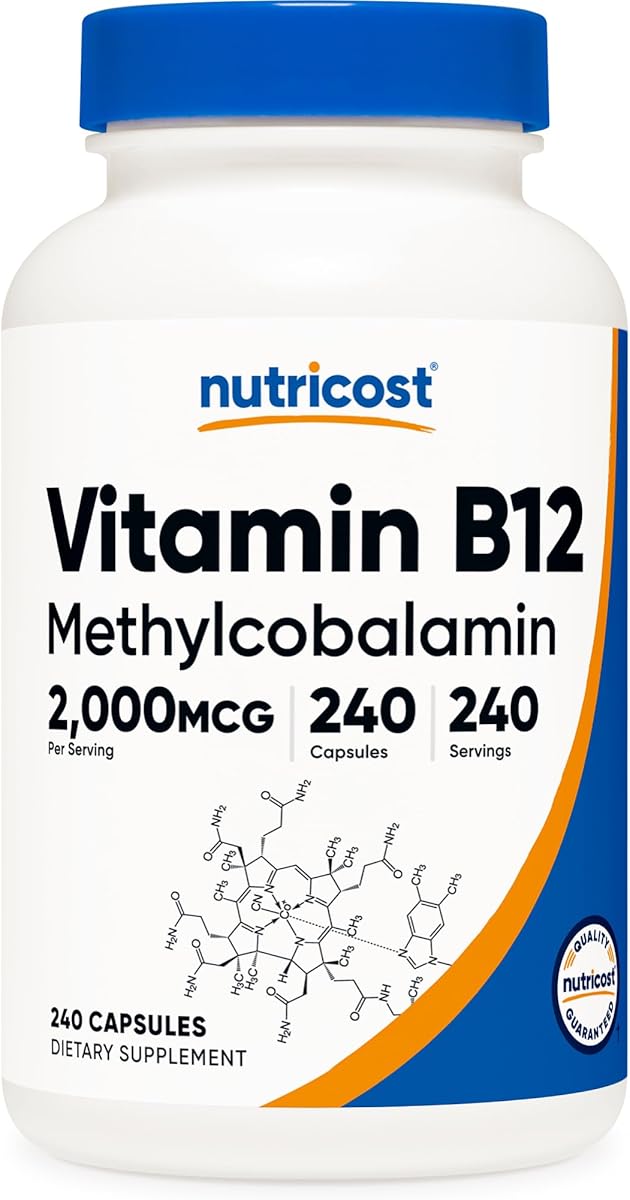
Nutricost Vitamin B12 Methylcobalamin 2000mcg, 240 Capsules
High-dose methylcobalamin (the active form) in an easy-to-swallow vegetarian capsule. Non-GMO, gluten-free, and third-party tested. Excellent value for daily maintenance or correction of deficiency — 240 capsules at an affordable price.

USDA Organic Vitamin B12 Sublingual Drops 5000mcg
High-potency liquid sublingual methylcobalamin that absorbs directly into the bloodstream under the tongue — bypassing gut absorption issues entirely. USDA certified organic, vegan-friendly. The best option for those with absorption challenges or who want the fastest-acting format.
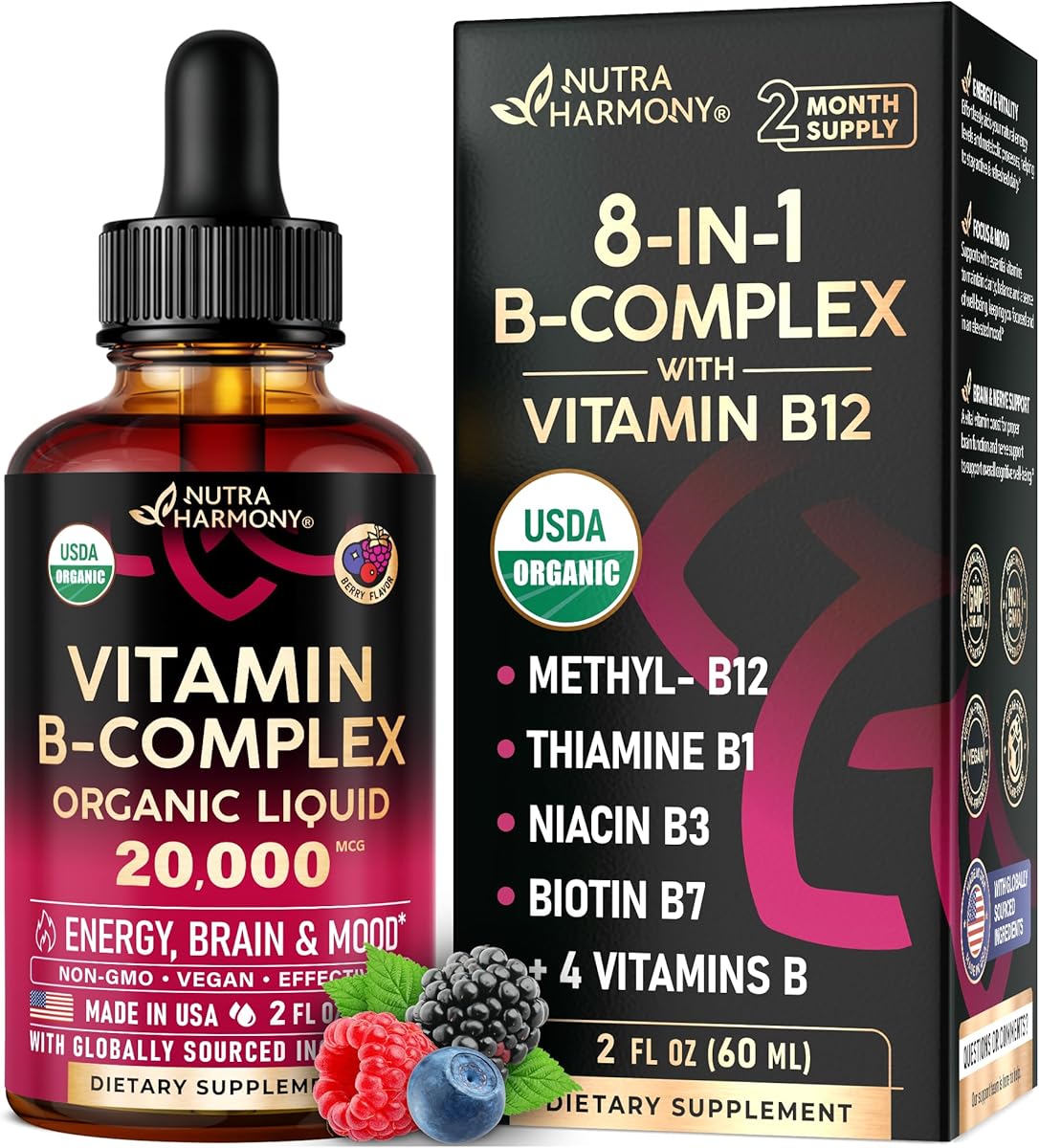
USDA Organic Vitamin B-Complex with B12 Methylcobalamin
Full-spectrum B-complex featuring methylcobalamin B12 alongside B1 thiamine, B5 pantothenic acid, and other essential B vitamins for comprehensive energy and neurological support. USDA certified organic. Ideal if you want B12 plus broader B vitamin coverage in one supplement.
Frequently Asked Questions
How will I know when my B12 levels are back to normal?
Get retested after 3 months of consistent supplementation. Most doctors flag deficiency below 200–300 pg/mL, but functional practitioners consider anything below 400–500 pg/mL suboptimal. Aim for 500–900 pg/mL for true optimization.
Can I get enough B12 from food alone?
If you eat animal products regularly, have healthy gut function, and adequate stomach acid production, possibly yes. But many women — especially those on hormonal birth control, acid reducers, or plant-forward diets — cannot rely on diet alone to maintain optimal levels.
Does B12 deficiency cause permanent damage?
Prolonged, severe B12 deficiency can cause irreversible neurological damage. This is rare in Western countries with access to supplementation, but it’s exactly why catching and correcting deficiency early matters. Most symptoms are fully reversible with prompt treatment.
Can B12 supplements help with energy even if I’m not deficient?
If your levels are genuinely optimal, additional B12 won’t provide extra energy — your body will simply excrete it. But many people who think they’re “fine” are actually in the lower end of normal, and correcting to optimal levels can make a meaningful difference.
Disclosure: This post contains affiliate links. As an Amazon Associate, I earn from qualifying purchases at no extra cost to you.
Free Download
Get My Daily Supplement Stack Guide
Everything I take, why I take it, and what I noticed — morning, midday, and evening. Free when you join the list.
No spam, ever. Unsubscribe anytime.