


I want to be honest with you: I slept terribly for almost two years. Not “took a while to fall asleep” terribly — I mean waking up at 2am with my heart racing, lying there running through every conversation I’d had, every item on my to-do list, every vague worry I couldn’t even name. By morning I was exhausted. By evening I was wired and anxious all over again. It was this miserable loop I could not break out of.
I tried everything the internet told me to try. Magnesium glycinate was on that list, but I honestly rolled my eyes. It’s a mineral. How was a mineral going to fix the kind of anxiety that had me drafting 3am emails I never sent? I tried it anyway, mostly out of desperation, and I want to tell you what actually happened — because it wasn’t dramatic, but it was real, and looking back, it was the thing that finally moved the needle.
If you’re a woman dealing with sleep problems, anxiety, tension headaches, period cramps, or just a general sense of being wound too tight, I think this post is going to feel very familiar. And I think magnesium glycinate might be the supplement you’ve been overlooking.
What Is Magnesium Glycinate?

Magnesium is the fourth most abundant mineral in the body. It’s involved in over 300 enzymatic reactions — everything from energy production to DNA repair to regulating your nervous system. The problem is that most of us are chronically deficient in it, and we have no idea. Soil depletion means our food contains less magnesium than it used to. Stress burns through magnesium faster than almost anything else. And when you’re deficient, your nervous system becomes hypersensitive — meaning everything feels bigger, louder, more urgent than it needs to.
Magnesium glycinate is specifically magnesium bound to glycine, an amino acid. This bonding does two important things: first, it dramatically improves absorption compared to cheaper forms like magnesium oxide (which your body barely absorbs and which is mainly used as a laxative). Second, glycine itself is calming — it’s an inhibitory neurotransmitter that helps quiet the nervous system. So you’re getting the benefits of magnesium plus the gentle calming effect of glycine. It’s genuinely one of the most bioavailable forms of magnesium you can take.
Why Magnesium Glycinate Specifically — Not Just Any Magnesium
This is where I see a lot of people go wrong. They buy whatever magnesium is cheapest, take it for two weeks, notice nothing, and conclude magnesium doesn’t work for them. But not all forms are equal:
- Magnesium oxide — cheapest, worst absorption (only about 4%). Mostly ends up in your colon, which is why it’s used for constipation relief.
- Magnesium citrate — better absorbed, great for digestion and constipation, but can cause loose stools at higher doses. Not ideal for sleep/anxiety.
- Magnesium malate — good for energy and muscle soreness. More energizing than calming.
- Magnesium glycinate (or bisglycinate) — highly bioavailable, gentle on the stomach, calming due to the glycine. This is the one for sleep and anxiety.
- Magnesium threonate — the only form shown to cross the blood-brain barrier; excellent for cognitive function, but expensive.
If you’re taking magnesium for sleep, anxiety, PMS, or muscle tension, glycinate is the form you want. Period.
The Benefits of Magnesium Glycinate for Women

It Actually Helps You Sleep
This is the big one, and it’s where I personally noticed the most change. Magnesium activates the parasympathetic nervous system — the “rest and digest” mode — and regulates melatonin, the hormone that governs your sleep-wake cycle. It also binds to GABA receptors in the brain, which is basically your body’s natural chill-out mechanism. When your magnesium is low, your nervous system can’t adequately wind down at night. You stay in a state of low-level activation even when you’re in bed, which is exactly the kind of wired-but-tired feeling I was dealing with.
Research backs this up. A study published in the Journal of Research in Medical Sciences found that magnesium supplementation significantly improved sleep time, sleep efficiency, and early morning awakening in older adults. Other studies have shown similar effects across age groups, particularly for people with insomnia or poor sleep quality. I can tell you from personal experience: within about two weeks of taking magnesium glycinate before bed, I stopped waking up at 2am. It didn’t hit me like a sleeping pill. It was more like… someone turned the static down.
It Reduces Anxiety and Calms the Nervous System
Magnesium is sometimes called “nature’s calcium channel blocker” because it regulates how calcium enters nerve cells. Too much calcium influx = an overexcited nervous system = anxiety, racing thoughts, that feeling of being on edge for no reason. Magnesium keeps calcium in check, helping neurons fire appropriately without the constant overstimulation.
Multiple meta-analyses have found a significant association between magnesium deficiency and anxiety. A 2017 systematic review in Nutrients concluded that magnesium supplementation has a beneficial effect on mild anxiety and stress. The glycinate form is particularly well-suited to this because — again — glycine itself has calming, anti-anxiety properties. I noticed a real shift in my baseline anxiety level over about a month. Not gone, but genuinely quieter.
It Eases PMS Symptoms and Hormonal Tension
If you have PMS — cramps, bloating, mood swings, headaches in the week before your period — magnesium deficiency may be a significant contributing factor. Magnesium helps relax smooth muscle (hello, uterine cramps), supports progesterone production, and regulates serotonin and dopamine, which go haywire in the luteal phase for many women.
Studies specifically on magnesium and PMS have found reductions in cramps, bloating, mood changes, and even premenstrual migraines. One study found that 360mg of magnesium daily reduced PMS-related mood symptoms, water retention, and pain. I track my cycle closely, and since starting magnesium glycinate, the three days before my period are noticeably more manageable. Not perfect, but genuinely better.
It Supports Muscle Recovery and Reduces Tension
Magnesium is required for muscle contraction and relaxation. When you’re deficient, your muscles can stay in a chronically tense state — leading to tension headaches, tight neck and shoulders, leg cramps at night, and slower recovery after workouts. If you exercise regularly and find you’re always sore or tight, low magnesium could be compounding that.
I used to wake up with headaches two or three times a week. I assumed it was from sleeping wrong or stress. After adding magnesium glycinate, those morning headaches became rare. My shoulders feel less like rocks. It’s not dramatic, but if you live in your body and pay attention, you’ll notice the difference.
It May Support Bone Health and Hormonal Balance
This one is less talked about but genuinely important for women long-term. About 60% of the body’s magnesium is stored in bone, and magnesium is essential for calcium metabolism and bone density. Women, particularly after 35, need to actively think about bone health — and most people are focused on calcium while ignoring the magnesium that actually helps your body use that calcium properly.
Magnesium also plays a role in insulin sensitivity and blood sugar regulation, which matters for energy, weight management, and hormonal balance. And it supports thyroid function, which is involved in metabolism, mood, and sleep. Basically, magnesium is quietly involved in almost everything that makes women feel good or terrible, and most of us aren’t getting enough of it.
It Supports Heart Health
Magnesium helps regulate heart rhythm and blood pressure. Low magnesium is associated with higher risk of hypertension, arrhythmias, and cardiovascular disease. This is more of a long-game benefit — not something you’ll notice next week — but it’s a compelling reason to make sure your magnesium intake is adequate over time, especially as cardiovascular risk increases after menopause.
My Top Pick: Pure Encapsulations Magnesium Glycinate
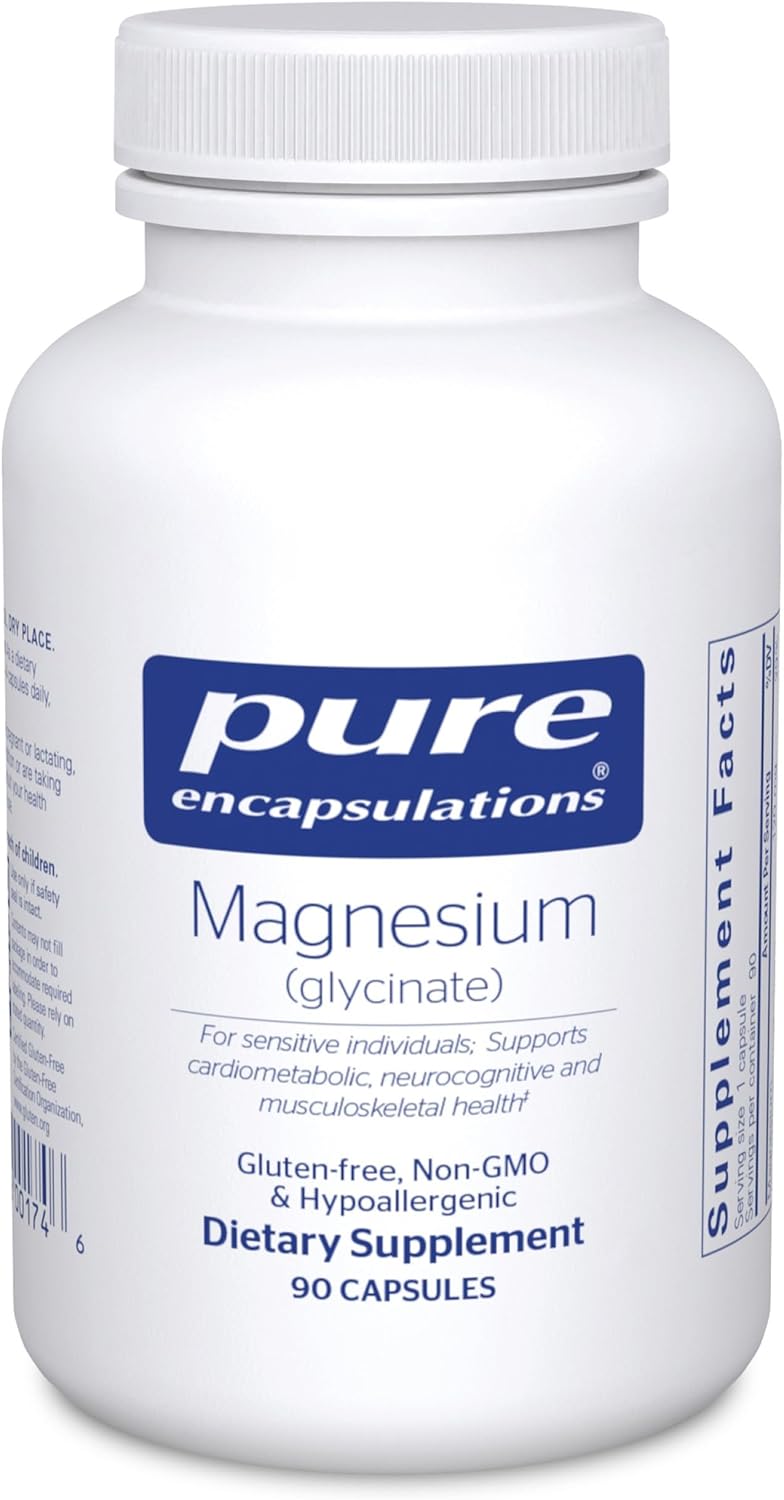
Pure Encapsulations Magnesium (Glycinate)
The #1 bestseller in magnesium supplements on Amazon, and my personal daily driver. Hypoallergenic, free from fillers, third-party tested for purity. This is the brand practitioners trust most. 46,000+ five-star reviews speak for themselves. 120mg elemental magnesium per capsule.
How Much Magnesium Glycinate Should You Take?
The recommended daily allowance for magnesium for adult women is 310–320mg, but many integrative health practitioners suggest that for therapeutic benefits — sleep, anxiety, PMS — you may want to aim for 300–400mg of elemental magnesium per day. This is a key distinction: the label will list the total weight of the supplement, but you want to pay attention to elemental magnesium, which is the actual magnesium content after accounting for the glycine it’s bound to.
Most capsules provide 100–200mg of elemental magnesium each. If you’re taking it primarily for sleep, take it 30–60 minutes before bed. If you’re taking it for general anxiety, PMS, or muscle tension, you can split the dose — some in the morning, more at night. Taking it with food can help with absorption and minimize any digestive sensitivity, though magnesium glycinate is generally very gentle on the stomach.
Start lower and work up. Some people start at 200mg and increase gradually. The main sign you’ve taken too much magnesium is loose stools — if that happens, pull back your dose.
What to Look for When Buying Magnesium Glycinate
The supplement industry is wildly unregulated, so label claims mean nothing if the product hasn’t been independently tested. Here’s what to look for:
- Third-party testing: Look for NSF, USP, or Informed Sport certification, or brands that publish their Certificates of Analysis. This verifies what’s on the label is actually in the capsule.
- Form: Should say “magnesium glycinate” or “magnesium bisglycinate” — these are the same thing, just different naming conventions.
- Elemental magnesium content: Check the Supplement Facts panel. You want to know how much actual magnesium you’re getting per serving.
- Clean ingredients: Avoid unnecessary fillers, artificial colors, or allergens if you have sensitivities. The best magnesium supplements have very short ingredient lists.
- Avoid magnesium oxide: If it’s listed alongside glycinate, it dilutes the quality. You want pure glycinate.
More Options Worth Considering
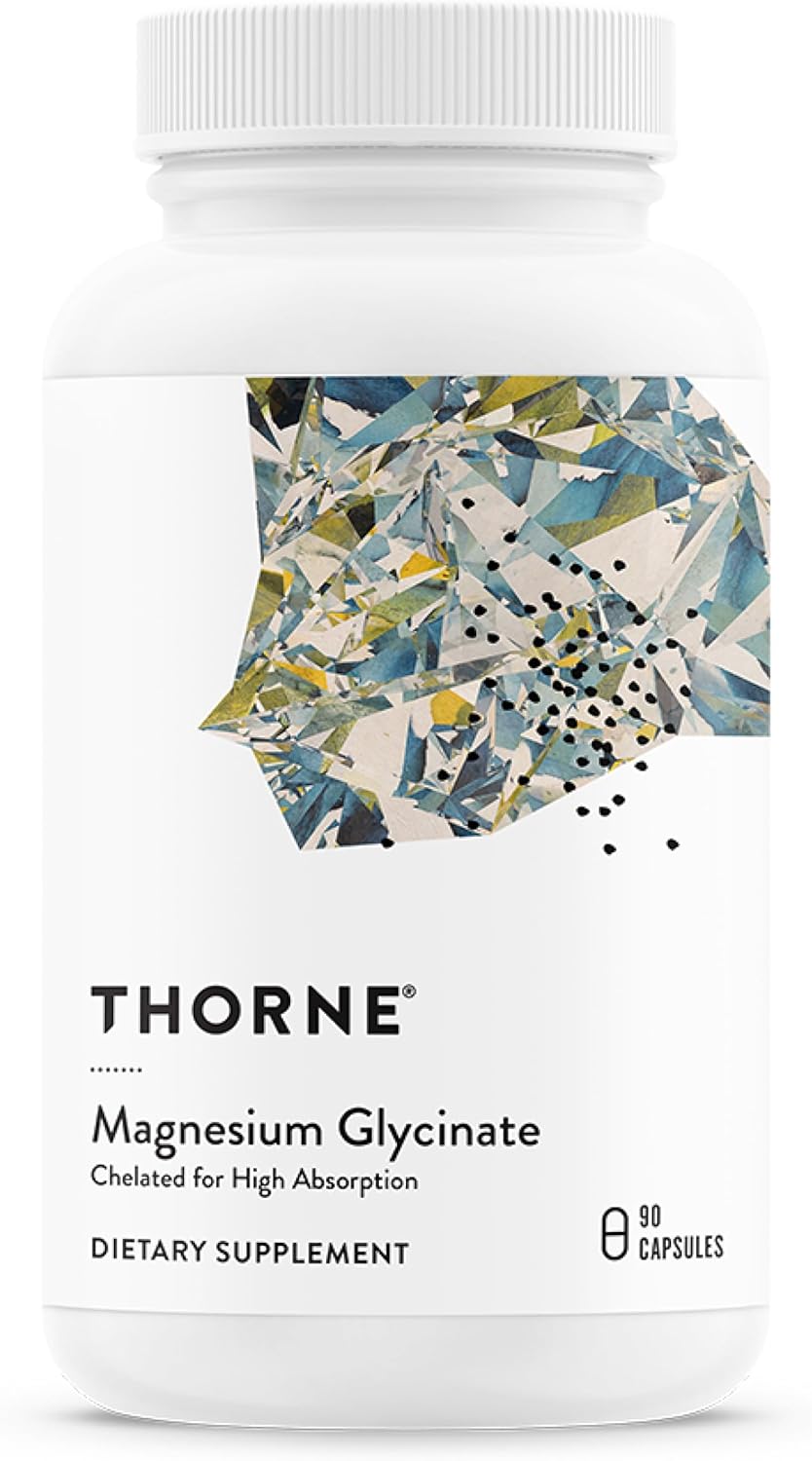
Thorne Magnesium Glycinate
Thorne is one of the most trusted names in clinical-grade supplements — the brand used by professional sports teams and recommended by integrative medicine doctors. Third-party tested, NSF Certified for Sport, and formulated without common allergens. 90 servings per bottle.
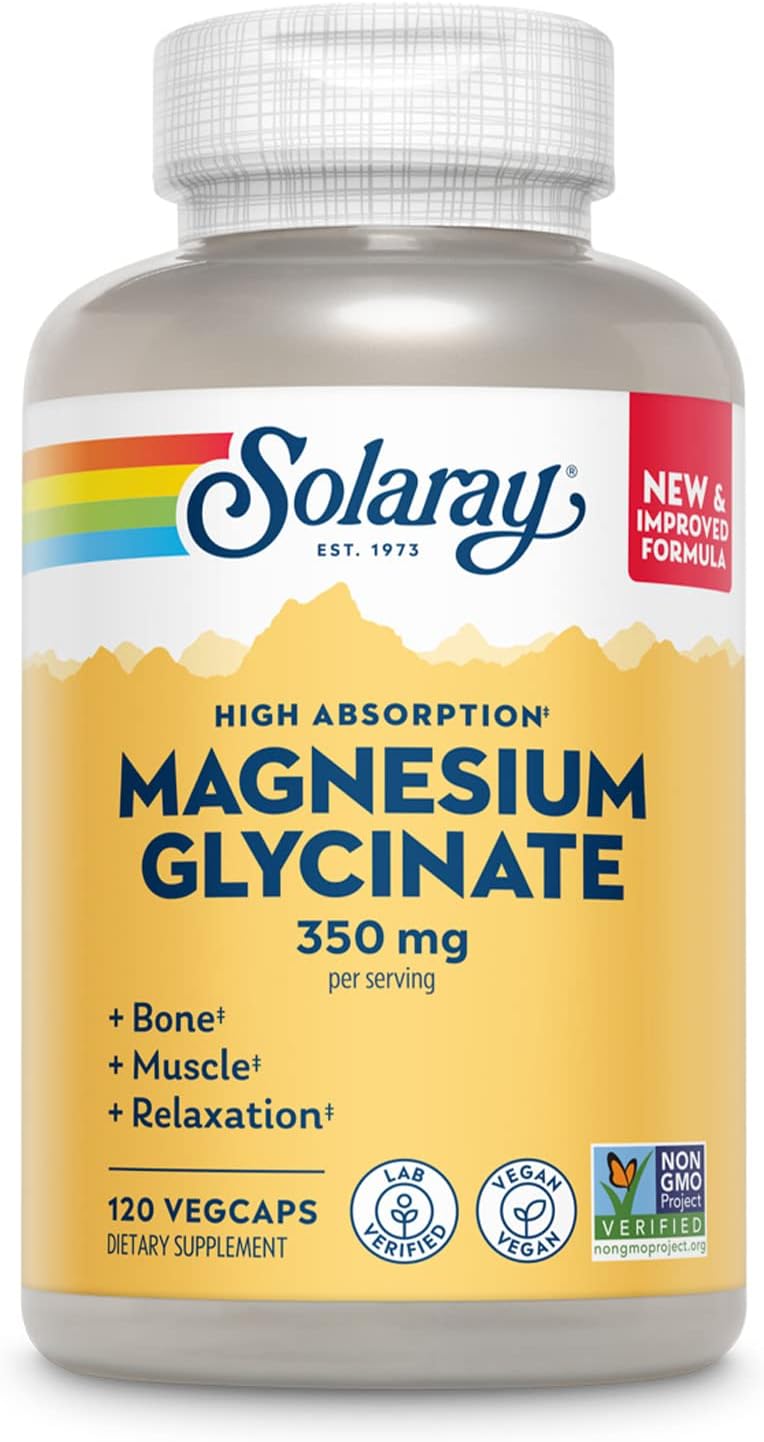
Solaray Magnesium Glycinate with BioPerine
A great budget-friendly option that doesn’t cut corners. Includes BioPerine (black pepper extract) to enhance absorption even further. Vegan, made in the USA, and one of the best value-per-mg options you’ll find. 7,700+ positive reviews.
Who Should Take Magnesium Glycinate?
Honestly? Most women. But specifically, you might want to seriously consider magnesium glycinate if you:
- Have trouble falling or staying asleep
- Deal with anxiety, racing thoughts, or chronic stress
- Experience PMS — cramps, mood changes, bloating, headaches
- Have frequent tension headaches or migraines
- Exercise regularly and deal with muscle soreness or cramping
- Experience restless legs or nighttime leg cramps
- Eat a diet low in dark leafy greens, nuts, seeds, and legumes
- Drink alcohol regularly (alcohol depletes magnesium)
- Take certain medications including diuretics, PPIs, or antibiotics (these deplete magnesium)
That said, there are some situations where you should check with your doctor first before supplementing. If you have kidney disease, kidney function impairment, or are on medications that affect kidney function, magnesium metabolism is different for you and dosing needs supervision. Also, if you’re on certain heart medications or have a heart condition, get clearance first — high magnesium can affect heart rhythm in some cases.
Frequently Asked Questions About Magnesium Glycinate
How long does it take to feel the effects of magnesium glycinate?
For sleep, many people notice improvement within one to two weeks of consistent use. For anxiety and PMS, it can take four to six weeks to build up adequate tissue stores and see a meaningful difference. Magnesium is not a quick fix — it’s a foundational supplement that works over time. Don’t give up after a few days.
Can I take magnesium glycinate every day?
Yes, and in fact that’s the point. Because magnesium is used continuously by hundreds of processes in your body, consistent daily supplementation is what maintains adequate levels. Think of it less like medicine and more like feeding a deficiency your body has been running on for months or years.
Will magnesium glycinate make me drowsy during the day if I take it in the morning?
No — magnesium doesn’t cause drowsiness the way a sleep aid does. It doesn’t sedate you. It supports your nervous system’s ability to regulate itself, which means better sleep at night and calmer waking hours during the day. Many people actually take it morning and night for anxiety without any daytime drowsiness.
Is it safe to take magnesium glycinate during pregnancy?
Magnesium needs actually increase during pregnancy, and magnesium deficiency is associated with preeclampsia and leg cramps. Many OBs recommend magnesium glycinate as a safe, gentle supplement during pregnancy. However, always check with your provider about dosage and timing specific to your situation.
What’s the difference between magnesium glycinate and magnesium bisglycinate?
They are essentially the same thing. “Bisglycinate” means the magnesium is bound to two glycine molecules (hence “bis”), while some products call a single-glycine bond “glycinate.” In practice, both terms appear on products with similar formulations, and the research and benefits apply to both. Don’t stress about which term you see on the label — just confirm the form is glycinate-based.
You’ll Also Love
- 10 Benefits of Magnesium for Women (And Why You’re Probably Deficient)
- Ashwagandha Benefits for Women: What It Actually Does
- Cycle Syncing Explained: How to Work With Your Hormones
- 10 Benefits of Cold Showers for Women
Free Download
Get My Daily Supplement Stack Guide
Everything I take, why I take it, and what I noticed — morning, midday, and evening. Free when you join the list.
No spam, ever. Unsubscribe anytime.