
I still remember the exact moment I swore off overpacking forever. It was a girls’ trip to Barcelona — my very first time traveling internationally — and I had somehow convinced myself that I needed a massive 28-inch checked bag for five days. I dragged it through cobblestone streets in the Gothic Quarter. I paid $65 in checked baggage fees each way. I lugged it up three flights of stairs to our Airbnb because there was no elevator. By day two, I was living out of the same three outfits while the rest of my bag sat untouched. I came home with a sore back, a lighter wallet, and a very clear resolution: never again. Since then, I’ve done a 10-day trip to Italy, a week in London, and a long weekend in New York — all with a single carry-on. And honestly? Travel has never been better. Here’s everything I wish I’d known sooner.
Affiliate Disclosure: This post contains affiliate links. If you purchase through my links, I may earn a small commission at no extra cost to you. I only recommend products I genuinely love and use. Thank you for supporting The Madison Effect!
Why Most People Overpack (and Why It Costs You)
Overpacking is almost never about practicality — it’s about anxiety. We pack for the worst-case scenario. What if it rains? What if there’s a fancy dinner? What if I want to work out? What if I just feel like wearing something different every single day? So we stuff in a little of everything, just in case. And then we haul all of it through airports, train stations, and city streets while using maybe 40% of it.
Here’s the thing: overpacking costs you money (checked bag fees, overweight fees), time (checking bags, waiting at carousels), energy (lugging heavy bags), and even experiences (you skip that spontaneous day trip because your bag is already at the hotel). The benefits of packing light go way beyond saving space in your closet. They change the entire texture of your trip.
Benefit #1 – No More Checked Bag Fees
Let’s start with the most obvious one: money. Airlines have turned checked baggage fees into a serious revenue stream. On domestic flights, you’re looking at $30–$40 each way. Internationally, it can be $60–$100 each way, sometimes more. On a round trip, that’s easily $60–$200 gone before you’ve bought a single souvenir or meal. And if you’re traveling with a partner or family, multiply that by however many bags you’re all checking.
When you pack light and fit everything into a carry-on or personal item, that money stays in your pocket. Or better yet — it goes toward an extra experience on your trip. That’s a nice dinner, a day tour, a museum ticket, or an extra night somewhere beautiful.
The key to making this work? Compression packing cubes. They’re the single biggest reason I can consistently fit a week’s worth of clothing into a carry-on. The compression zippers literally squeeze air out of your clothes so you can pack nearly twice as much in the same space.

BAGSMART 6-Set Compression Packing Cubes
~$35
These are a game-changer — compression zippers shrink everything down significantly
Benefit #2 – You Move Through Airports in Half the Time
Picture this: you land at your destination. Your flight mates are filing through the jet bridge, heading toward baggage claim. You walk past them, straight through the terminal and out the door — because everything you brought is already in your hands. That’s one of the most satisfying feelings in travel, and it’s completely available to you every single trip.
Airports are big. Baggage claims are often the furthest point from the gate. You might wait 20–45 minutes for your bag to show up on the carousel. Then you have to wrestle it off, drag it through customs, queue for a taxi or find your rideshare. Add up all that time over several trips and it’s hours of your life spent waiting for stuff you didn’t really need to bring.
Packing light gives you your time back. You breeze through security faster (no checked bag to tag and drop). You board with confidence. You deplane and disappear. It sounds small until you experience it, and then you never want to go back.
Benefit #3 – Less Anxiety Before, During, and After Your Trip
Pre-trip packing stress is real. The “what am I going to wear for every single occasion” spiral that starts a week before you leave and ends with you sitting on your suitcase trying to zip it shut at midnight — that’s not fun. And overpacking doesn’t actually solve the anxiety; it just gives it a physical form.
When you commit to packing light, something interesting happens. You make more deliberate decisions. You think through your actual itinerary. You choose pieces that genuinely work together. The decision-making happens once — before the trip — instead of being stretched across the whole journey as you move heavy bags around, repack constantly, and stress about fitting everything into the overhead bin.
Post-trip, packing light also means unpacking is done in 10 minutes. There’s no mountain of wrinkled clothes to sort through. Your bag basically empties itself. And if anything went to the laundry on the trip, you’re already ahead.
Benefit #4 – You Can Take Any Spontaneous Trip
When you’re a light packer, you’re always trip-ready. You could decide on a Thursday that you want a long weekend somewhere and actually go — because you can pack in 20 minutes and fit everything in a bag that goes under the seat. No checking luggage. No planning an elaborate packing session. No “I don’t have time to pack that much.”
This kind of freedom is genuinely life-changing. I’ve done spontaneous weekend trips to friends’ cities, last-minute travel deals, and work trips with only a few days’ notice — all because I know exactly what I need and I can have it packed fast. Your whole relationship with travel changes when you don’t feel like it requires a big production.
Organization is the secret weapon here. If all your travel items have a home in your packing cubes, you’re not hunting around for things — you’re just grabbing and going.

Shacke Packing Cubes 5-Set
~$27
A bestseller for a reason — durable, lightweight, and great for organizing every category of clothing
Benefit #5 – Your Back and Shoulders Will Thank You
Heavy bags do real damage over time. If you’ve ever arrived at a destination with shoulder soreness, neck tension, or back pain from hauling a stuffed suitcase around, you know exactly what I mean. When you’re dragging a 50-pound checked bag through cobblestones or up subway stairs, you’re working your body in ways it wasn’t designed to sustain for an entire travel day.
A well-packed carry-on bag — properly distributed on your back or rolling smoothly behind you — is so much kinder to your body. You arrive feeling good instead of already depleted. You can walk further, explore more, stay out longer. Physical ease is an underrated travel luxury.
If you travel frequently, this compounds. Your body will thank you in a very real way over months and years of lighter packing.
Benefit #6 – You Never Have to Wait at Baggage Claim Again
I touched on this above, but it deserves its own moment of appreciation. Baggage claim is a special kind of airport purgatory. You stand at a carousel with 200 other tired people, watching bags circle around, waiting for yours to appear. Sometimes it comes quickly. Sometimes it takes 40 minutes. Sometimes it doesn’t come at all — because it got lost.
Lost luggage is statistically rare but devastatingly inconvenient when it happens. Airlines mishandled 2.86 bags per thousand passengers in 2022 — which sounds small until it’s your bag missing on the first day of your trip to Paris. When your bag is carry-on only, it is always with you. It never gets lost. It never gets delayed. It never goes to the wrong city.
The peace of mind alone is worth learning to pack lighter.
Benefit #7 – It Forces You to Actually Wear What You Pack
Here’s a truth that overpacking hides: most of us have a much smaller “actual travel wardrobe” than we think. When you unpack after a trip, there are always items with the tags still on them in the figurative sense — things you brought but never touched. The extra dress “just in case.” The third pair of shoes. The full set of workout clothes you used once.
Packing light forces you to be honest with yourself. You can only bring what you’ll actually use. And you know what? You figure out pretty quickly what that is. After a few trips where you consciously limit yourself, you develop a clear sense of your travel style and what you genuinely need. That’s a form of self-knowledge that translates beyond travel — it changes how you shop, how you dress, how you think about what you actually love wearing.
Benefit #8 – You Can Shop and Bring Things Home
One of my favorite travel rituals is picking up something local — a beautiful scarf in Florence, olive oil from a market in Athens, a candle from a little shop in Copenhagen. When you travel with a packed-to-the-brim bag, there’s no room for any of it. You either have to ship things home (expensive), buy an extra bag (more fees), or just… skip it.
When you pack light, you have space. You can buy a little something at each destination and still fly home carry-on only. Souvenirs don’t have to be skipped or stressed over. And honestly, the less you bring, the more permission you give yourself to buy something meaningful while you’re there.
A set with a dedicated laundry pouch is particularly brilliant for this — because as you use your dirty laundry section, you’re naturally creating space in your bag as the trip goes on.

BAGAIL 8-Set Packing Cubes
~$29
Perfect if you want a full set with a separate shoe bag and laundry pouch
Benefit #9 – It Makes Trip Planning Less Stressful
When you’ve made peace with packing light, the pre-trip mental load drops dramatically. You stop thinking “what if I need this?” for every item. You have a system. You know your capsule items. You know what works. Packing becomes a 30-minute exercise instead of a multi-day ordeal.
This also means you’re in a better mental state when your trip begins. You’re not exhausted from the packing process. You didn’t stay up until 1 AM trying to fit everything in. You leave feeling organized, prepared, and actually excited — not relieved that you survived the packing.
Benefit #10 – You Realize You Need Way Less Than You Think
This one is the big one — and it sneaks up on you. After a few trips where you packed light and everything was fine (great, even), you start to notice something: you’re okay with less. The ten outfits you thought you needed became five, and five became three, and three always felt like plenty. The same realization tends to spread beyond travel. You start looking at your closet differently. Your home differently. Your shopping habits differently.
Packing light is, for a lot of people, a gateway into a simpler, more intentional approach to things generally. You realize that more stuff doesn’t mean more enjoyment. It often means more friction. And that’s a pretty valuable lesson to carry home from every trip.
My Packing Light System (The 3 Bottoms / 5 Tops Rule)
If you’re not sure where to start, here’s the system I use every time. Think of it as building a capsule travel wardrobe:
- 3 bottoms: One pair of jeans (wears multiple times, versatile), one pair of lightweight pants or a skirt, one pair of shorts or another casual option depending on destination.
- 5 tops: Three casual day tops, one nicer going-out top, one lightweight layer (a linen shirt, a cardigan, or a drapey jacket that pulls double duty).
- 1–2 dresses or jumpsuits: These pack small and give you an instant outfit. They’re worth their weight in saved space.
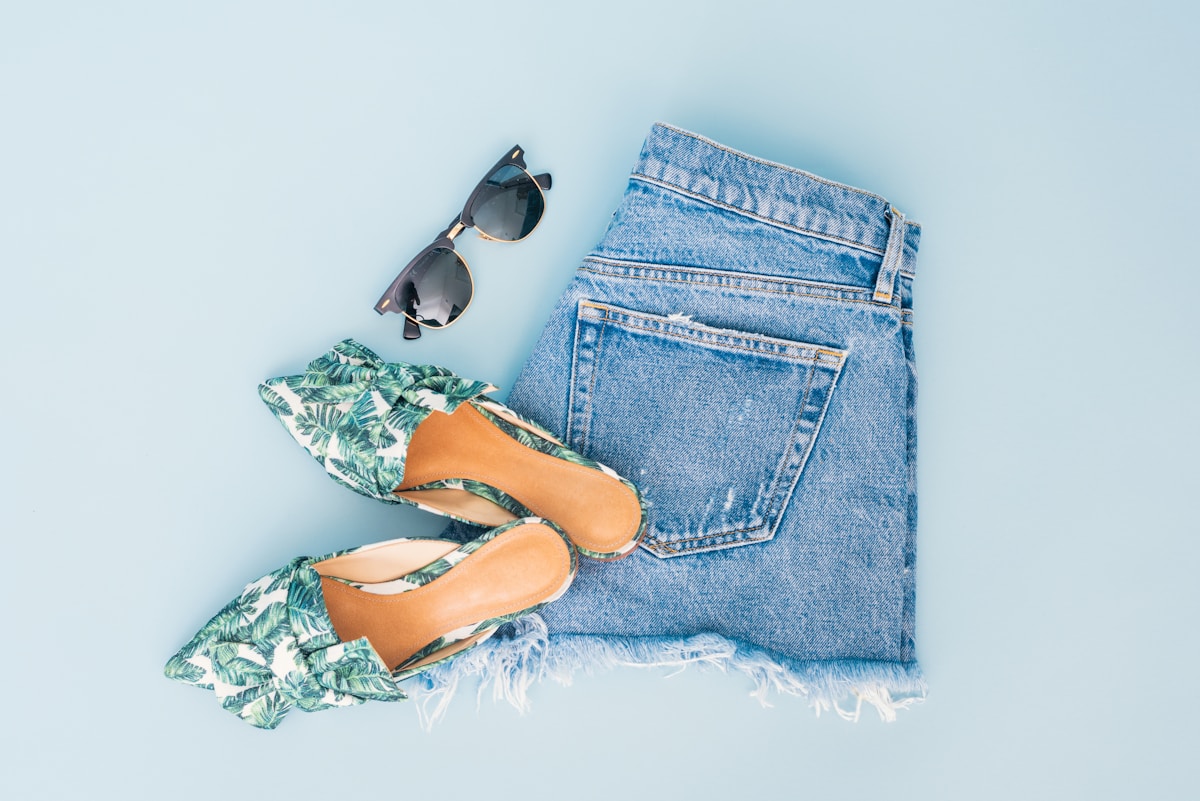
- 2 pairs of shoes: One versatile walking shoe (white sneakers, comfortable loafers), one pair that elevates for evenings (sandals, low heels, clean white shoes often double).
- Accessories do the heavy lifting: A silk scarf, a statement earring, a belt — these change how outfits read and pack into almost no space.
The goal is a collection where everything mixes and matches freely. If you lay everything out and can create 15+ outfits from those pieces, you’re in great shape.
What I Never Leave Home Without
Packing cubes — non-negotiable. They keep everything organized and make it easy to find things without unpacking everything. I keep: one cube for tops, one for bottoms, one for undergarments and socks, one for accessories and cables. Everything has a home.
Travel-size toiletries — full-size bottles are one of the biggest space wasters in any bag. Refillable silicone bottles are my go-to; you fill them from your home products, they go through security no problem, and they take up a fraction of the space.
One versatile shoe that works for everything. I’m an honest person, so I’ll admit I usually bring two — but my rule is that both have to work for walking long distances and look presentable at dinner. A clean sneaker, a strappy sandal, or a simple loafer can cover almost everything depending on your trip.
Frequently Asked Questions
How do you pack light for a 2-week trip?
Exactly the same way as a 1-week trip, honestly. The secret is that you wear things multiple times and do laundry once mid-trip. Most hotels and Airbnbs have laundry facilities or you can find a local laundromat. Packing for 7 days and doing one wash means you always have clean clothes without needing 14 outfits. The 3 bottoms / 5 tops capsule works just as well for two weeks as for one.
Can you really do carry-on only for international travel?
Absolutely, yes. I’ve done it for 10-day trips and it’s completely manageable. The key is choosing versatile pieces in similar color families, packing compression cubes to maximize space, and being honest about what you’ll actually wear versus what you’re packing “just in case.” International airports actually make carry-on easier in some ways — you breeze through customs with no bag to wait for.
What’s the best carry-on size to avoid fees?
Most major airlines accept a carry-on up to 22 x 14 x 9 inches, though it varies. Budget airlines like Spirit and Frontier are stricter and may charge for overhead bin bags. For the most universal carry-on size, aim for around 40L capacity or a bag marketed as a “personal item” (typically 18 x 14 x 8 inches or under). When in doubt, check the specific airline’s policy before you travel.
How do packing cubes help?
Packing cubes do three things: they compress your clothes to take up less space, they keep categories organized so you can find things instantly, and they prevent your bag from becoming a chaotic mess when you’re moving between multiple destinations. Compression cubes specifically squeeze air out of bulkier items like sweaters and jeans — the difference is really noticeable.
What should I leave at home?
The “just in case” items you’ve never actually needed on past trips. Multiple pairs of shoes when two will do. Full-size bottles of anything. More than one bag within a bag. Bulky books (your phone has apps). The full makeup kit when a travel palette works. The hairdryer (hotels almost always have one). And honestly — anything you haven’t worn in the past two weeks of real life.
Reminder: This post contains affiliate links. Shopping through my links supports The Madison Effect at no extra cost to you — thank you so much! As an Amazon Associate, I earn from qualifying purchases.
Free Download
Get My Daily Supplement Stack Guide
Everything I take, why I take it, and what I noticed — morning, midday, and evening. Free when you join the list.
No spam, ever. Unsubscribe anytime.