
Ashwagandha went from obscure Ayurvedic herb to mainstream wellness staple practically overnight — and honestly, it’s one of the few supplements that genuinely lives up to the hype, especially for women dealing with chronic stress, hormonal disruption, sleep issues, or thyroid concerns. I’ve taken it consistently for over two years now, and the difference in my baseline stress reactivity and sleep quality is real and measurable. But like any supplement, the benefits depend entirely on how you take it, what form you choose, and whether it’s actually appropriate for your health situation. This post covers everything — the science, the benefits specific to women, the caveats, and how to choose the right product.
What Is Ashwagandha?
Ashwagandha (Withania somnifera) is a small woody shrub native to India, the Middle East, and parts of Africa. In Ayurvedic medicine — India’s traditional system of healing — it has been used for over 3,000 years as a rasayana, meaning a rejuvenating tonic. It’s classified as an adaptogen, a category of herbs that help the body adapt to physical and psychological stress.
What makes adaptogens special is their bidirectional, normalizing effect. They don’t simply stimulate or sedate — they help regulate the body’s response to stress in whichever direction is needed. Ashwagandha specifically modulates the HPA axis (the hypothalamic-pituitary-adrenal axis), which is essentially your body’s central stress-management system. When the HPA axis is chronically dysregulated — as it often is in modern, high-stress lives — the downstream effects include elevated cortisol, disrupted sleep, hormonal imbalances, inflammation, weight gain, and fatigue.
The active compounds in ashwagandha are called withanolides. These steroidal lactones are what drive most of the herb’s documented effects, which is why standardized extracts (like KSM-66 and Sensoril) that guarantee a minimum withanolide concentration are preferred over raw ashwagandha powder in research and clinical settings.
The Research-Backed Benefits for Women
Ashwagandha has been studied more extensively than most adaptogens, and the results across multiple randomized controlled trials are consistently positive. Here are the benefits with the strongest evidence:
Cortisol Reduction: Multiple RCTs have demonstrated statistically significant reductions in serum cortisol (the primary stress hormone) with 300–600mg of standardized ashwagandha extract daily. In one well-cited 2019 study, participants taking KSM-66 showed a 30% reduction in cortisol levels compared to placebo after 8 weeks.
Improved Sleep Quality: Ashwagandha has been shown to improve both sleep onset latency (how quickly you fall asleep) and sleep quality scores in multiple clinical trials. This effect is likely related to the herb’s cortisol-lowering and nervous system-calming properties.
Reduced Anxiety: Several studies have shown significant reductions in anxiety scores using validated scales (like the GAD-7 and DASS-21) among participants taking ashwagandha versus placebo. The effect size is modest but consistent.
Hormonal Balance Support: Emerging research suggests ashwagandha may support thyroid hormone levels and improve reproductive hormone balance, particularly in women dealing with stress-related hormonal disruption. The mechanism is primarily through cortisol reduction — lower cortisol allows the entire hormonal cascade (estrogen, progesterone, testosterone, thyroid) to function more effectively.
Potential Libido Improvement: A 2015 study specifically examining ashwagandha in women with female sexual dysfunction found significant improvements in arousal, lubrication, orgasm, and satisfaction compared to placebo. This may relate to reduced cortisol and increased androgen availability.

Natgrown Ashwagandha KSM-66 600mg — Organic, Stress & Mood Support
$23.72
One of the best KSM-66 formulas on Amazon — standardized extract, clean ingredients, great reviews.
How It Supports Hormonal Health in Women
This is where ashwagandha becomes particularly relevant for women, and it’s also one of the most misunderstood aspects of the herb. Ashwagandha doesn’t directly supply hormones or act as a hormone replacement. Instead, it works upstream — by regulating the stress response system that dysregulates everything else.
Here’s the connection: chronic stress elevates cortisol. Elevated cortisol is an emergency signal to the body — it tells your HPA axis to prioritize stress-response functions and de-prioritize reproduction, thyroid function, and immune activity. Your body literally downregulates estrogen, progesterone, and thyroid hormone production when cortisol is chronically high. This is why women under chronic stress often experience irregular periods, worsening PMS, thyroid problems, and fertility challenges.
By reducing cortisol and calming the HPA axis, ashwagandha removes the upstream bottleneck. When your body stops receiving constant stress signals, it can reallocate resources back to hormonal regulation and reproductive health. This is why many women notice improvements in cycle regularity, PMS severity, sleep quality, and general hormonal wellbeing after 6–8 weeks of consistent ashwagandha use — particularly if their hormonal symptoms were stress-related.
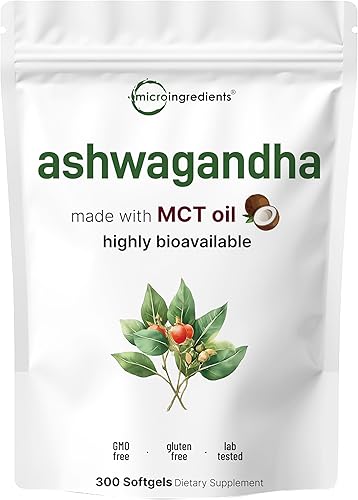
Micro Ingredients Ashwagandha with Coconut MCT Oil Softgels + Black Pepper
$25.99
MCT oil delivery system improves absorption — a smart formulation for bioavailability.

Ashwagandha 3000mg Gummies for Women & Men — Extra Strength, 180 Count
$33.99
High-strength ashwagandha gummies for those who prefer not to swallow capsules.
Ashwagandha and Thyroid Health
This is the most important nuance in the ashwagandha conversation, especially for women, who account for the majority of thyroid conditions.
Research has shown that ashwagandha can stimulate thyroid activity — specifically, it may increase T3 and T4 levels. For women with hypothyroidism (an underactive thyroid), this is generally beneficial. Several small studies have shown improvements in thyroid hormone levels and TSH in hypothyroid patients taking ashwagandha alongside their standard treatment.
For women with hyperthyroidism (an overactive thyroid) or Hashimoto’s thyroiditis (an autoimmune thyroid condition), however, ashwagandha requires more caution. Because Hashimoto’s is an autoimmune condition and ashwagandha can modulate immune activity, the effect isn’t always predictable. Some practitioners feel it’s beneficial; others are more conservative. If you have any thyroid condition — and especially if you’re on thyroid medication — discuss ashwagandha with your healthcare provider before starting.
Additionally, ashwagandha can interact with thyroid medications by potentially enhancing their effect. If you’re on levothyroxine or liothyronine, monitor your thyroid levels more frequently in the first few months of use.
How to Take Ashwagandha for Best Results
Dosage and form matter significantly. Here’s what the research and clinical experience support:
Dosage: 300–600mg per day of standardized extract (KSM-66 or Sensoril) is the range used in most clinical trials. Lower doses (150–300mg) may provide mild benefits; doses above 600mg don’t appear to offer additional benefit and may increase the risk of side effects like digestive upset or vivid dreams.
Form: KSM-66 is the most studied form, derived from root only, and standardized to at least 5% withanolides. Sensoril is a full-spectrum extract (root and leaf) standardized to at least 10% withanolides. Both are well-researched. Raw ashwagandha powder (in some capsules or teas) is less reliably dosed.
Timing: Most people do well taking ashwagandha once daily with food. Many prefer the evening (with dinner or before bed) because the calming, cortisol-lowering effect supports sleep. Some prefer the morning, especially if they’re focused on stress management during the day. Trial both and see what works for your body.
Cycling: Most practitioners recommend cycling ashwagandha rather than taking it indefinitely — 8–12 weeks on, then 2–4 weeks off. This prevents adaptation and allows you to assess your baseline again. After a break, you can evaluate whether to continue, which also helps you track whether the supplement is actually working.

Pure Encapsulations Ashwagandha 500mg — Premium Clean Formulation, Metabolism Support
$29.00
Pure Encapsulations is one of the most trusted clinical supplement brands. NSF certified.

Life Extension Optimized Ashwagandha — Non-GMO, Gluten Free, 150 Veg Caps
$22.97
A clinically tested, clean-label ashwagandha from one of the most respected supplement companies.

Organic KSM-66 Ashwagandha 1000mg — 150 Vegetarian Capsules, Highest Concentration
$31.59
Full-spectrum organic KSM-66 at 1000mg per serving — one of the highest concentrations available.
What to Expect and When
Ashwagandha is not a fast-acting supplement. Its effects are cumulative and subtle — which is actually a good sign that it’s working on the root cause rather than just masking symptoms. Here’s a general timeline:
Week 1–2: Improved sleep quality is often the first thing people notice. You may feel slightly calmer and less reactive to stressors, though this can be subtle at first. Some people notice a slight energy improvement in the morning.
Week 3–4: Mood stabilization becomes more noticeable. Anxiety feels more manageable. The cortisol response to everyday stressors is less intense. Some women notice reduced PMS symptoms if they’re in their luteal phase during this window.
Week 6–8: If hormonal symptoms were stress-related, this is often when you start seeing improvements — more regular cycles, less severe PMS, better sleep throughout the month, improved energy. If you have thyroid issues, this is also when you might notice changes in energy and temperature regulation.
Week 8–12: Full picture of effects. At this point, you have a solid baseline for deciding whether to continue, adjust dosage, or cycle off for a break. Keep a simple daily journal during this period — tracking sleep, mood, energy, and cycle symptoms — so you have data to assess rather than just feelings.
Who Should NOT Take Ashwagandha
Ashwagandha is generally very safe, but there are specific populations for whom it’s not appropriate:
- Pregnant women: Ashwagandha has uterine-stimulating properties and is traditionally avoided during pregnancy. Do not take it if you’re pregnant or trying to conceive without medical guidance.
- Breastfeeding women: Insufficient safety data for nursing mothers.
- Women with autoimmune thyroid conditions: See the thyroid section above — proceed only with medical supervision.
- Anyone on thyroid medication: Potential for interaction; monitor levels more frequently.
- Women with nightshade sensitivity: Ashwagandha is in the nightshade (Solanaceae) family. If you have documented nightshade sensitivity or intolerance, avoid ashwagandha.
- Anyone scheduled for surgery: Ashwagandha can affect blood pressure and blood sugar; discontinue at least two weeks before any scheduled procedure.
Frequently Asked Questions
How long does ashwagandha take to work?
Most people begin to notice subtle effects (improved sleep, slightly calmer stress response) within the first two weeks. More significant changes in mood, hormonal symptoms, and energy typically emerge at 4–8 weeks of consistent daily use. Full effects are usually apparent by 8–12 weeks. This is why it’s important to commit to at least two full months before evaluating whether it’s working for you.
Can ashwagandha help with weight loss?
Ashwagandha is not a weight loss supplement, but it can indirectly support healthier weight management through stress reduction. Chronically elevated cortisol is strongly associated with abdominal fat storage, insulin resistance, and increased appetite for high-calorie foods. By reducing cortisol, ashwagandha can help normalize these patterns. Some studies have shown modest reductions in body weight and BMI in subjects with high chronic stress. Don’t expect dramatic results, but it can be a helpful supporting element in a broader wellness approach.
Is ashwagandha safe to take every day?
Yes, at the research-supported dose of 300–600mg daily, ashwagandha is considered safe for daily use for 8–12 week periods. Most practitioners recommend cycling it (8–12 weeks on, 2–4 weeks off) rather than taking it indefinitely. Side effects are uncommon at appropriate doses but can include digestive upset, drowsiness, or vivid dreams in some people. High doses (above 1000mg daily) may cause liver stress in susceptible individuals — stay within the research-backed range.
Can ashwagandha help with anxiety?
Yes — this is one of ashwagandha’s best-documented benefits. Multiple randomized controlled trials have shown significant reductions in anxiety scores using validated measures among subjects taking KSM-66 or Sensoril ashwagandha vs. placebo. The effect size is moderate and comparable to some pharmaceutical interventions, particularly for generalized, stress-related anxiety. For clinical anxiety disorders, ashwagandha may be a useful adjunct but should not replace proper psychiatric care.
What’s the best form of ashwagandha to buy?
Look for supplements standardized to KSM-66 or Sensoril — these are the most clinically studied and reliably dosed forms. KSM-66 is root-only and standardized to ≥5% withanolides; Sensoril is full-spectrum and standardized to ≥10% withanolides. Avoid products that list only “ashwagandha powder” without specifying the extract or withanolide percentage. Third-party tested products (NSF Certified, Informed Sport, or USP Verified) are a good quality signal for capsule-based supplements.
Shop All Recommendations
My top ashwagandha picks for women at every preference and budget:
Natgrown Ashwagandha KSM-66 600mg — Organic, Stress & Mood Support
$23.72
One of the best KSM-66 formulas on Amazon — standardized extract, clean ingredients, great reviews.
Ashwagandha 3000mg Gummies for Women & Men — Extra Strength, 180 Count
$33.99
High-strength ashwagandha gummies for those who prefer not to swallow capsules.
Micro Ingredients Ashwagandha with Coconut MCT Oil Softgels + Black Pepper
$25.99
MCT oil delivery system improves absorption — a smart formulation for bioavailability.
Pure Encapsulations Ashwagandha 500mg — Premium Clean Formulation, Metabolism Support
$29.00
Pure Encapsulations is one of the most trusted clinical supplement brands. NSF certified.
Life Extension Optimized Ashwagandha — Non-GMO, Gluten Free, 150 Veg Caps
$22.97
A clinically tested, clean-label ashwagandha from one of the most respected supplement companies.
Organic KSM-66 Ashwagandha 1000mg — 150 Vegetarian Capsules, Highest Concentration
$31.59
Full-spectrum organic KSM-66 at 1000mg per serving — one of the highest concentrations available.